
-
North America Models
-
Oceania Models

 English
How Does Motorized Trailer Jockey Change the Way Trailers Are Moved
Moving a trailer sounds simple until the trailer needs to be placed in a specific position.
A trailer may need to move through a yard, enter a workshop, leave a storage area, or line up with another vehicle. In an open space, this may seem straightforward. In a busy working area, the situation can be very different. Limited room, parked vehicles, uneven layouts, and changing work schedules can make trailer movement a time-consuming task.
Traditional trailer movement often depends on a towing vehicle. This works well when the towing vehicle is already available and there is enough room for it to approach the trailer. But not every movement needs a full-size vehicle. In many cases, the real task is simply to reposition the trailer.
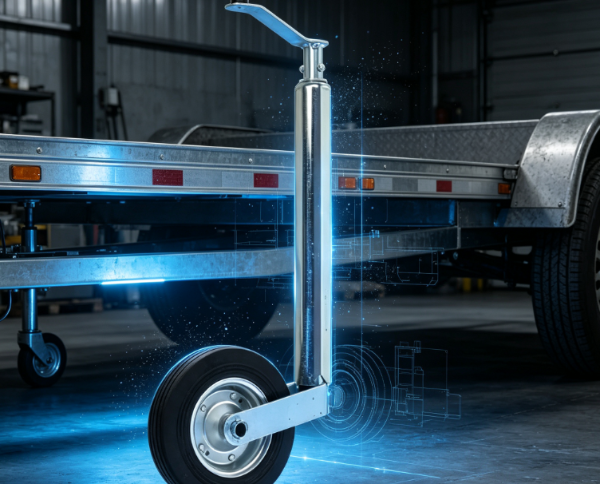
This is where a Motorized Trailer Jockey offers a different approach. Instead of treating every trailer movement as a towing job, it provides a dedicated way to move and position the trailer itself. The change may appear simple, but it can influence how yards, workshops, storage areas, and other working spaces are organized.
What Role Does a Motorized Trailer Jockey Play in Trailer Handling?
A Trailer Jockey is designed to assist with moving trailers when a conventional towing vehicle is not the most practical option. It connects with the trailer and provides controlled movement, allowing the operator to guide the trailer toward a desired location.
This changes the way people can think about trailer handling. The task is no longer limited to pulling a trailer from one place to another with a separate vehicle. Movement and positioning become more closely connected. An operator can focus on where the trailer needs to go rather than arranging a larger vehicle for every small adjustment.
The distinction becomes more noticeable in places where trailers are moved regularly. A storage yard may have several trailers waiting for different jobs. A workshop may need to reposition trailers as work progresses. A business may also need to move trailers between parking and loading areas. These activities can involve many small movements rather than one long journey.
For these situations, a dedicated trailer-moving device can become part of the daily workflow. It does not replace every towing task. Instead, it provides another option for situations where controlled positioning matters more than road travel.
Why Is Trailer Positioning Becoming More Important?
Trailer movement is not always about distance. In many working environments, positioning is the real challenge.
A trailer may need to fit into a particular parking space or line up with an entrance. It may need to move around another trailer or equipment. Even a small change in direction can matter when the available space is limited. This makes precise movement an important part of everyday trailer handling.
The growing attention to positioning also comes from changes in how working spaces are used. Storage areas are often expected to serve several purposes. Parking, loading, maintenance, and temporary storage may take place within the same general area. The ability to move trailers without depending on a large towing vehicle can give operators more options when arranging these spaces.
| Trailer Handling Situation | Possible Benefit of a Motorized Trailer Jockey |
|---|---|
| Moving a trailer within a yard | Provides a dedicated option for local movement |
| Repositioning near a workshop | Helps adjust trailer placement without arranging a towing vehicle |
| Working in a confined area | Supports movement where vehicle access may be inconvenient |
| Organizing several trailers | Makes individual repositioning easier to plan |
| Adjusting a parked trailer | Allows small movements to become part of routine handling |
This does not mean every trailer requires the same approach. The value comes from matching the movement method to the task. When the task is mainly about positioning, a smaller dedicated solution may make more sense than using a vehicle intended for broader towing work.
How Does Motorized Trailer Jockey Change Daily Trailer Movement?
The biggest change may be the way operators approach short-distance trailer movement. Instead of waiting for a towing vehicle to become available, they may have a dedicated tool for moving the trailer within the working area.
This can make daily tasks feel more connected. A trailer that needs to be shifted can be handled as part of the existing workflow. Operators do not necessarily need to treat every small repositioning task as a separate vehicle movement.
The change can also influence scheduling. When trailer movement depends on another vehicle, operators may need to coordinate with other activities. The towing vehicle may be in use, parked elsewhere, or needed for another job. A dedicated trailer jockey provides another way to organize these smaller movements.
There is also a human side to the change. Trailer handling is not only about equipment. It is about how people interact with the equipment around them. A system that is easier to understand and fit into daily routines may help operators approach trailer positioning as a normal part of the work rather than an inconvenient extra task.
What Makes Confined Spaces a Challenge for Trailer Movement?
Large open areas give operators more room to work. Crowded yards and workshops offer a different experience.
A trailer may need to move between buildings, around parked equipment, or into an area with limited access. The towing vehicle itself also needs room to approach and move with the trailer. This can make a relatively short trailer movement more complicated than expected.
A Motorized Trailer Jockey changes the physical relationship between the trailer and the equipment moving it. Because the device is intended specifically for trailer handling, the operator can work with the trailer directly rather than bringing a larger vehicle into every part of the site.
This can be useful in several types of environments:
- Trailer storage areas with limited space between units
- Workshops where vehicles and equipment occupy much of the available floor area
- Private yards where trailers need regular repositioning
- Agricultural or commercial areas with changing work layouts
- Loading and service areas where trailer placement needs to change throughout the day
The exact suitability depends on the trailer, surface, layout, and operating conditions. The important point is that trailer movement can be planned around the space available rather than automatically around the size of a towing vehicle.
How Can Motorized Trailer Jockey Support More Flexible Workflows?
A working area rarely remains unchanged throughout the day. A trailer may arrive empty and later need to be moved closer to a work area. Another trailer may need to be parked temporarily while a different task takes place. These movements can be difficult to plan if every adjustment depends on a separate towing vehicle.
A Motorized Trailer Jockey can provide another layer of flexibility. It allows trailer movement to become more independent from the wider vehicle schedule. Operators can consider the trailer's immediate location and destination without always involving another road-going vehicle.
This can be particularly useful for businesses that handle several trailers. Instead of thinking about all trailer movement as one type of task, operators can separate longer-distance towing from local positioning. Each activity can then be handled according to its own requirements.
The result is not necessarily a more complicated system. In some cases, it can make the workflow easier to understand because different equipment is used for different jobs.
| Type of Movement | Typical Planning Focus |
|---|---|
| Longer-distance towing | Road travel and towing vehicle availability |
| Yard movement | Space, direction, and trailer positioning |
| Workshop positioning | Access to work areas and nearby equipment |
| Temporary relocation | Speed of moving the trailer between work areas |
| Parking adjustment | Space management and ease of repositioning |
This way of dividing tasks can also help businesses look at their equipment more carefully. Not every movement requires the same tool, and not every trailer needs to be handled in the same way.
Why Does Operator Control Matter in Trailer Handling?
Trailer movement takes place in a physical environment. The operator needs to understand where the trailer is going and how the surrounding space is changing.
Control therefore becomes an important part of equipment selection. An operator may need to make small adjustments while watching the trailer, nearby objects, access routes, and other people in the area. The equipment needs to fit naturally into this process.
A dedicated trailer-moving device can make the operator's role more direct. Rather than coordinating the movement of a separate towing vehicle and trailer at the same time, the operator can focus more closely on trailer positioning.
Clear controls and a sensible operating arrangement also matter. Equipment should be understandable in normal working conditions. Operators may use it repeatedly, so unnecessary complexity can become a burden over time.
This is one reason why trailer jockeys are being considered not only as movement equipment but also as workflow equipment. Their value can depend on how naturally they fit into the tasks people already perform.
What Should Buyers Consider When Choosing a Motorized Trailer Jockey?
Choosing trailer movement equipment should begin with the actual working environment. A product may appear suitable in general terms, but the surrounding conditions determine whether it fits the intended task.
Buyers can look at several practical questions before making a decision:
Where will the trailer usually be moved?
Consider yards, workshops, storage areas, loading zones, or other working spaces.
How often will repositioning take place?
Frequent movement creates different needs from occasional trailer adjustment.
How much room is available?
The layout can influence how easily an operator can approach and move the trailer.
Who will operate the equipment?
Controls, visibility, handling, and general usability should match the people using it.
How will the equipment be stored and maintained?
A dedicated device still needs a practical place in the working environment.
Could the working area change later?
Future layout changes may influence how flexible the trailer-moving arrangement needs to be.
These questions move the buying decision away from product appearance alone. They also help distinguish between a device intended for occasional repositioning and one that will become part of a regular trailer-handling routine.
Compatibility is another important consideration. The trailer, connection point, working surface, and surrounding layout all need to be considered together. A suitable choice is therefore not simply about the equipment itself. It is about the relationship between the equipment and the trailer it will move.
Could Motorized Trailer Jockey Change the Way Trailer Yards Are Organized?
The introduction of dedicated trailer-moving equipment can influence more than the movement of individual trailers. It may also change how businesses think about the space where trailers are stored and handled.
When every movement depends on a towing vehicle, the layout may need to accommodate that vehicle. Routes need to remain accessible, and enough room may be required for the towing vehicle to approach the trailer. With another movement option available, some areas may be planned around the trailer itself rather than around the towing vehicle.
This does not mean that large vehicles become unnecessary. Long-distance towing and road transport still require appropriate vehicles. The change is more subtle. Local trailer positioning can become a separate activity with its own equipment and workflow.
That distinction may encourage businesses to look more closely at how trailers move through their facilities. A storage area can be planned with movement in mind. A workshop can consider how trailers enter and leave working spaces. A commercial yard can separate parking, loading, and service activities more clearly.
As trailer handling becomes more closely connected with space planning, the Motorized Trailer Jockey takes on a broader role. It becomes part of the conversation about how trailers are positioned, how operators work around them, and how everyday movement can fit more naturally into the layout of a working site.
- Trailer
- Utility Trailer
- Dump Trailer
- Boat/Watercraft Trailer
- Aluminum Trailer
- Equipment Trailer
- Box Trailer
- Hydraulic Tipper Trailer
- Boat Trailer
- Specialist Trailer
- Caravan
- Off Road Caravan - Crest 16
- On Road Caravan - Trekker 19
- On Road Caravan - Trekker 22F
- Pop-top Caravan - Pod 15C
- Trailer Parts
- All Parts
- Contact Us
-
- No.888 South Longqian Ave, Bailongqiao Town Jinhua Zhejiang, China
-
+86-579-82217008
+86-579-82221688 -
sales@yqtrailer.com
 High-Quality Trailers & Caravans Manufacturer