

 English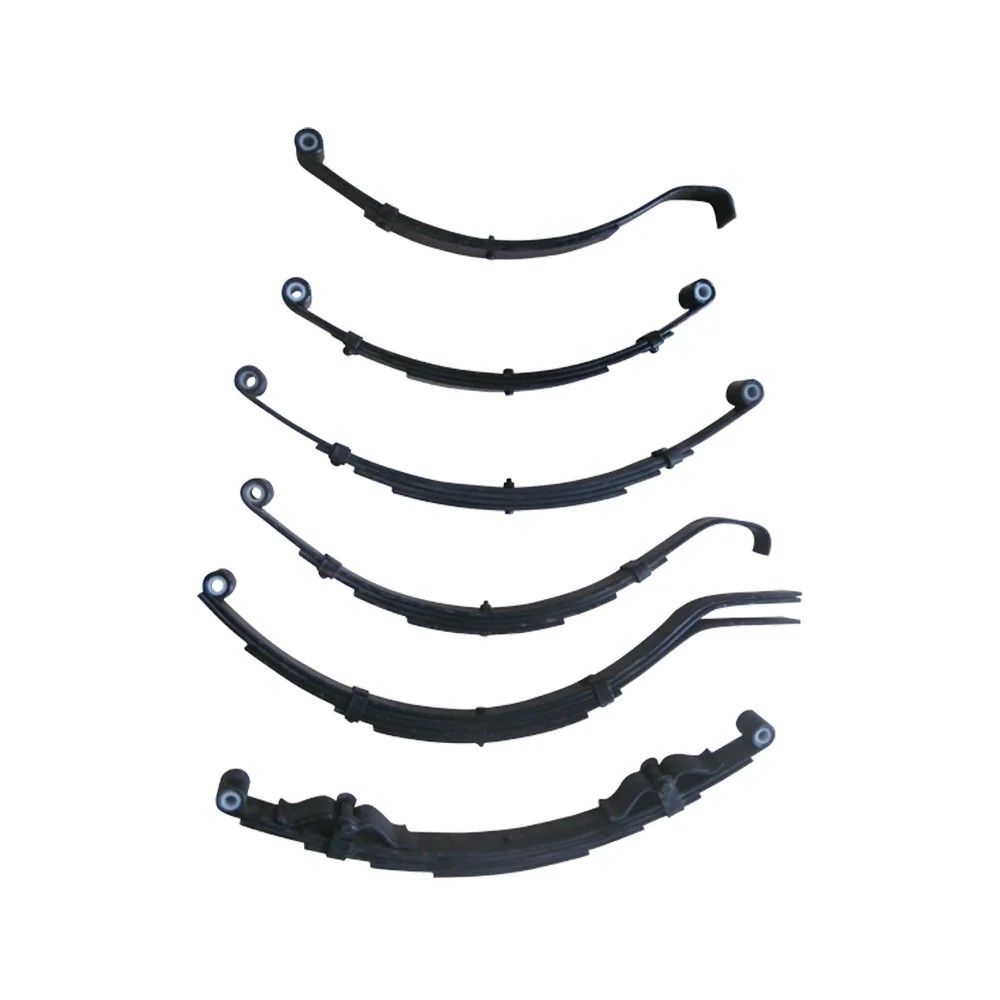



Factory Engineering Knowledge for Trailer Leaf Springs
Working as a factory focused on trailer parts and suspension components, leaf springs get built here for utility trailers, equipment trailers, plant trailers, skid steer trailers, cargo trailers, agricultural trailers, car haulers, and heavy-duty transport platforms. A leaf spring ranks among the most important parts in any trailer suspension system — it carries the trailer load, absorbs road impact, keeps the axle in position, and helps spread weight between the frame and running gear.
In trailer use, leaf springs deal with constant bending, vibration, shock loads, and shifting road conditions. Every trip adds stress cycles as the trailer rolls over bumps, potholes, gravel, job-site ground, or uneven rural roads. Because of this, leaf spring quality comes down to more than thickness or looks — it depends on steel grade, heat treatment, arch control, leaf count, eye design, clamp structure, surface protection, and how well the spring resists fatigue.
A well-built utility trailer leaf spring helps steady towing, cuts down frame vibration, protects axles and tyres, and extends how long the whole suspension system lasts.
Main Function of Leaf Springs in Trailer Suspension
Leaf springs act as both a support structure and a shock absorber at once, connecting the trailer frame to the axle through hangers, shackles, equalizers, U-bolts, and spring seats.
Their main jobs include:
- Supporting vertical load from the trailer frame
- Absorbing road shocks and vibration
- Keeping the axle aligned
- Helping distribute load across the axle system
- Reducing impact stress on the frame
- Improving towing stability
- Protecting tyres, hubs, bearings, and axles
- Supporting suspension movement during travel
Where some suspension parts handle just one job, leaf springs combine load-bearing and damping behavior in a single compact structure — which makes them a practical fit for utility and heavy-duty trailer work.
Common Types of Trailer Leaf Springs
Different trailer platforms call for different leaf spring structures, and the right choice depends on suspension layout, axle capacity, frame design, and the environment the trailer works in.
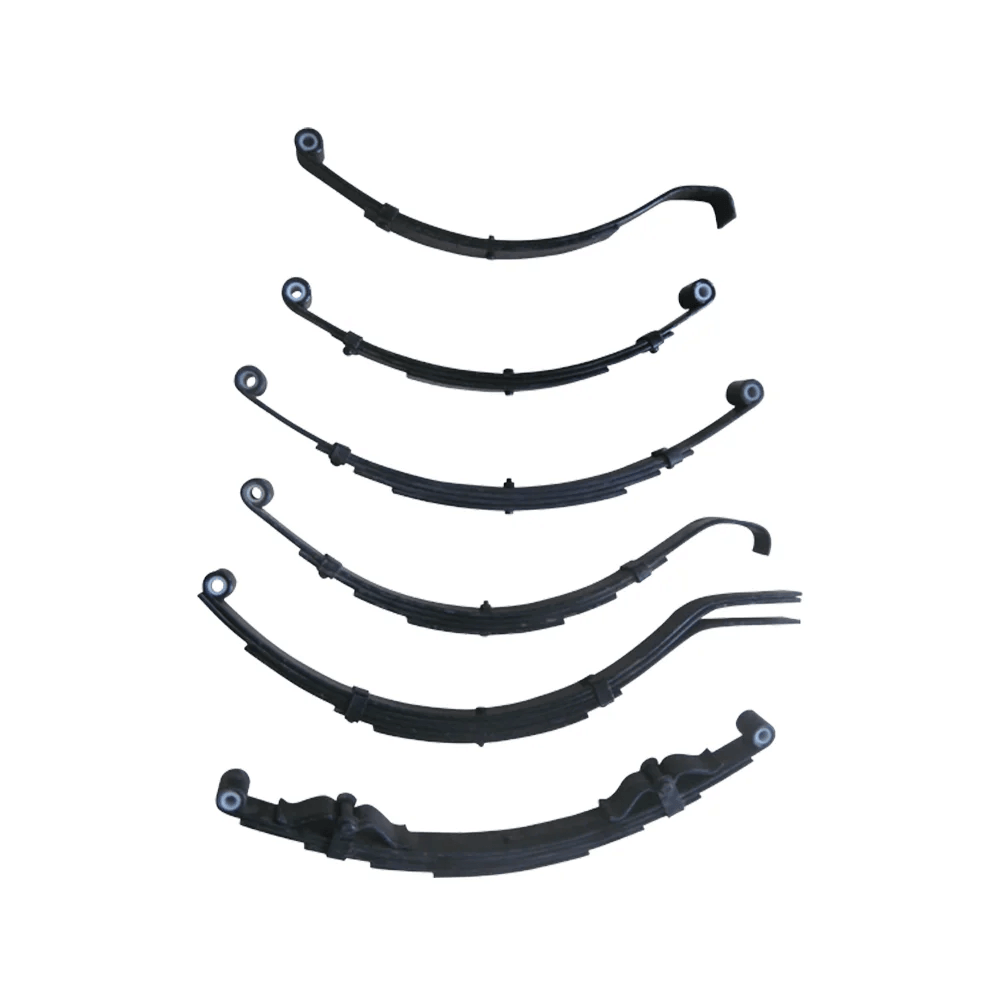
Double-Eye Leaf Spring
A double-eye leaf spring has round eyes at both ends and typically installs with hangers and shackles. This setup gives smooth suspension movement and shows up widely in utility trailers, cargo trailers, car haulers, and general-purpose trailer systems.
Key features:
- Stable mounting structure
- Smooth suspension movement
- Works with shackle systems
- Fits many trailer axle setups
- Common on single-axle and tandem-axle trailers
Slipper Leaf Spring
A slipper leaf spring has one eye at the front and an open curved end at the rear, which slides against a hanger or wear surface as the suspension moves. This design gets used often in heavier trailer applications since it handles strong vertical loads and impact forces well.
Key features:
- Strong load-bearing performance
- Simple rear mounting
- Suited to heavy-duty use
- Practical for equipment and plant trailers
- Holds up well under rough working conditions
Multi-Leaf Spring
A multi-leaf spring stacks several steel leaves together. Leaf count, thickness, and length together set the stiffness and load capacity, and these designs show up widely across commercial and industrial trailer suspensions.
Key features:
- Higher load capacity
- Good impact resistance
- Stiffness adjustable through leaf count
- Suited to heavy-duty trailers
- Holds up reliably under frequent load cycles
Mono-Leaf Spring
A mono-leaf spring uses a single spring plate, running lighter than multi-leaf designs and fitting lighter trailer applications or purpose-built suspension systems.
Key features:
- Lightweight structure
- Simple design
- Fewer parts
- Suited to select light-duty trailers
Material Selection and Spring Steel Performance
Leaf springs typically get made from high-strength spring steel, which needs to deliver elasticity, fatigue resistance, toughness, and stable performance once heat treated.
Important material characteristics:
- High tensile strength
- Good elastic recovery
- Strong fatigue resistance
- Impact toughness
- Stable hardness after heat treatment
- Resistance to permanent deformation
- Suitable bending performance
The steel needs to spring back to its designed arch after repeated loading. Poor material quality shows up as flattening, cracking, or early loss of load-carrying ability.
For trailer work, spring steel selection has to account for trailer load rating, road conditions, how often the trailer runs, and a reasonable safety margin.
Heat Treatment and Fatigue Resistance
Heat treatment stands as one of the most critical production steps for leaf springs, since it shapes strength, elasticity, and fatigue life directly.
The typical process runs through:
Heating Steel leaves get heated to the temperature needed for structural transformation.
Forming and Cambering The heated leaf gets shaped into the required arch height.
Quenching Rapid cooling raises hardness and strength.
Tempering Controlled reheating cuts brittleness and improves toughness.
Stress Relief Internal stress gets managed to reduce cracking and improve fatigue life.
Poorly controlled heat treatment leaves the spring too brittle, too soft, or inconsistent from batch to batch — any of which can cause early failure under repeated trailer loads.
Arch Height and Load Behavior
Arch height, also called camber, shapes ride height, load response, and suspension travel. Getting the arch right matters for keeping trailer geometry correct once loaded.
If the arch runs too high:
- Installation gets harder
- Trailer height may end up excessive
- Suspension movement may feel too stiff
- Frame geometry may shift off
If the arch runs too low:
- The trailer sits too low
- Suspension travel shrinks
- Tyres may rub against fenders
- Springs may bottom out under load
Proper arch height helps hold axle position, ground clearance, and load distribution where they need to be.
Leaf Count, Thickness and Load Rating
Leaf count and steel thickness shape stiffness and capacity directly. More leaves doesn't automatically mean better performance — the whole design needs to match the trailer system it's going on.
Key design factors:
- Number of leaves
- Individual leaf thickness
- Spring width
- Overall spring length
- Free arch height
- Eye-to-eye distance
- Clamp position
- Load rating
- Axle capacity
- Trailer GVWR
A spring that's too soft sags quickly. One that's too stiff rides rough, adds frame stress, and cuts tyre contact stability on uneven roads. Matching the design correctly matters.
Eye Types and Bushing Design
The spring eye connects the leaf spring to the trailer hanger or shackle, making it an important wear point and load-transfer point.
Common eye designs:
- Standard round eye
- Reverse eye
- Open eye
- Hook end
- Slipper end
Bushings come in nylon, rubber, bronze, or other wear-resistant materials, cutting down metal-to-metal contact and allowing controlled movement during suspension travel.
Bushing requirements worth noting:
- Proper inner diameter
- Wear resistance
- Smooth movement
- Correct fit with bolts
- Resistance to deformation
- Long service life under vibration
Worn bushings can bring noise, poor axle alignment, uneven tyre wear, and weaker suspension stability.
Surface Treatment and Corrosion Protection
Leaf springs face water, mud, road salt, gravel, dust, and outdoor storage — corrosion protection matters because rust cuts fatigue life and weakens the spring surface over time.
Common surface treatments:
- Black painted finish
- E-coating
- Powder coating
- Zinc coating
- Galvanized finish
- Anti-rust oil treatment
Painted Finish Painted leaf springs suit standard trailer applications, giving basic corrosion protection and a clean look.
E-Coating E-coating gives more even coverage, particularly around edges and recessed areas, useful for stronger corrosion protection.
Galvanized Finish Galvanized leaf springs bring stronger corrosion resistance, useful for outdoor, coastal, agricultural, and high-humidity settings.
Surface protection should get chosen based on climate, road salt exposure, and expected service conditions.
Trailer Compatibility and Suspension Matching
Leaf springs need to match the trailer frame, axle, hanger spacing, and suspension layout. Mismatched components can lead to poor performance or unsafe operation.
Compatibility factors worth checking:
- Spring length
- Spring width
- Eye diameter
- Bushing size
- Load rating
- Arch height
- Leaf count
- Hanger spacing
- Axle location
- U-bolt size
- Equalizer type
- Single or tandem axle layout
- Trailer GVWR
For tandem-axle trailers, springs also need to work correctly with equalizers to share load between axles. A poorly matched spring can throw off load distribution, adding stress to tyres, hubs, bearings, and frame components.
Load Distribution and Towing Stability
Leaf springs shape how weight transfers between the frame and axles. Getting load distribution right improves towing stability, braking performance, and tyre life.
Poor load distribution can lead to:
- Uneven tyre wear
- Trailer sway
- Rough towing
- Frame stress
- Axle misalignment
- Spring flattening
- Hanger damage
- Weaker braking stability
A properly designed trailer axle leaf spring keeps the trailer balanced under load and cuts down vibration reaching the frame.
Manufacturing Process for Trailer Leaf Springs
Production runs through controlled steps and inspection to keep strength, consistency, and long-term durability on track.
Main Production Steps
Steel Material Selection Spring steel gets chosen according to load rating and design requirements.
Cutting and End Forming Steel strips get cut to length, with ends formed to match eye or slipper design.
Eye Rolling Double-eye springs need accurate eye forming for correct bushing fit.
Heating and Shaping Leaves get heated and shaped into the required arch.
Quenching and Tempering Heat treatment builds hardness, elasticity, and toughness.
Shot Peening Surface compressive stress gets improved to boost fatigue resistance.
Assembly Leaves get stacked, clamped, and connected with center bolts.
Surface Treatment Painting, e-coating, powder coating, or galvanizing gets applied.
Final Inspection Dimensions, arch height, hardness, surface quality, bushing fit, and assembly strength all get checked.
Selection Guide for Utility Trailer Leaf Springs
A few factors deserve careful checking when selecting leaf springs:
Trailer GVWR Spring capacity needs to match the rated trailer system.
Axle Capacity Leaf springs should suit axle rating and suspension layout.
Spring Length Eye-to-eye or slipper length needs to match hanger spacing.
Spring Width Width has to fit hangers, shackles, and spring seats.
Arch Height The right arch keeps ride height and suspension travel where they should be.
Eye and Bushing Size These need to match bolts and suspension hardware.
Road Condition Rough roads call for stronger fatigue resistance and suitable spring stiffness.
Corrosion Environment Outdoor, coastal, farm, or winter-road use may call for better surface protection.
Load Frequency Frequent heavy-load work needs higher fatigue resistance and stable heat treatment quality.
Common Applications
Trailer leaf springs turn up across many trailer categories.
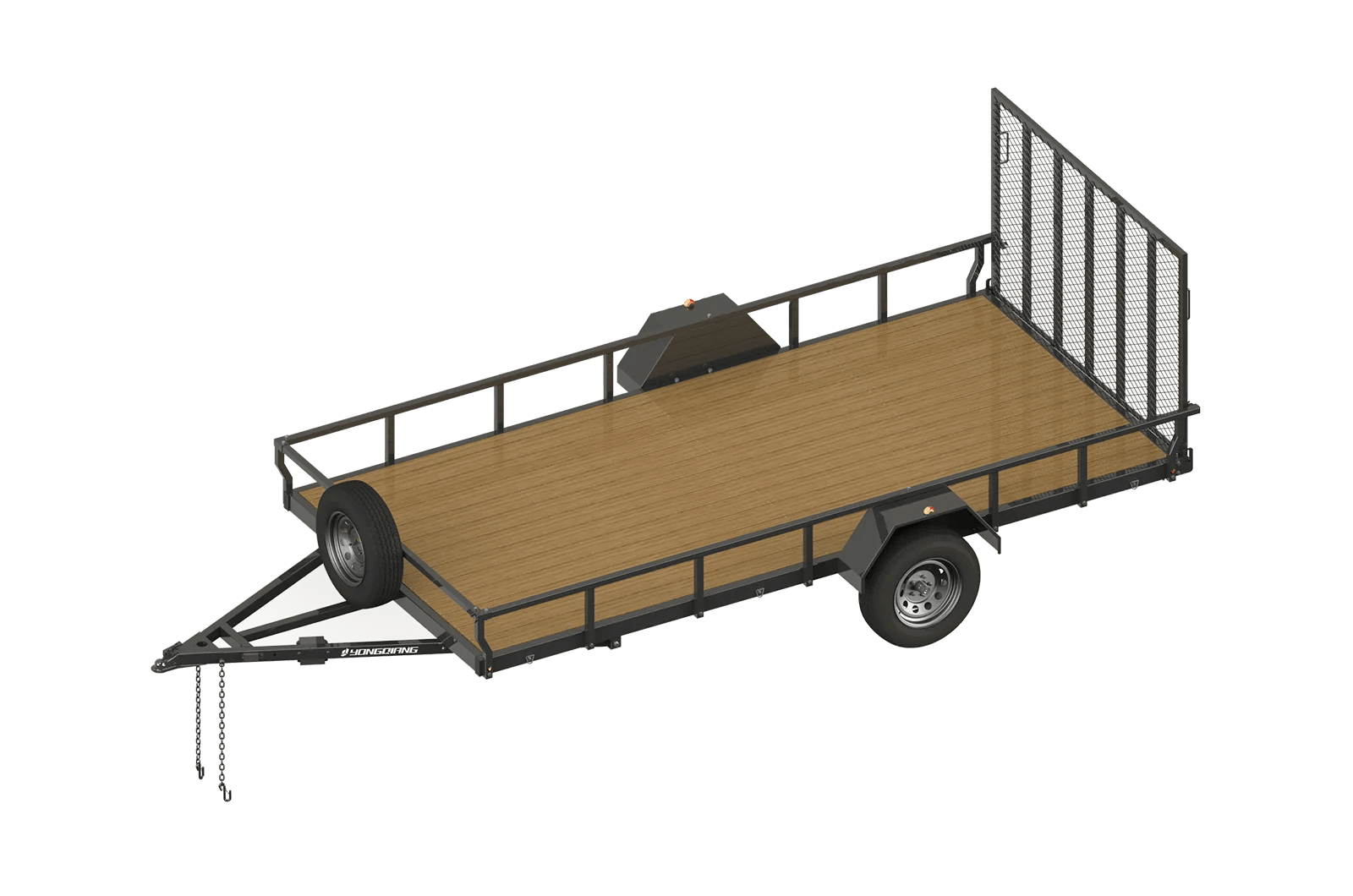
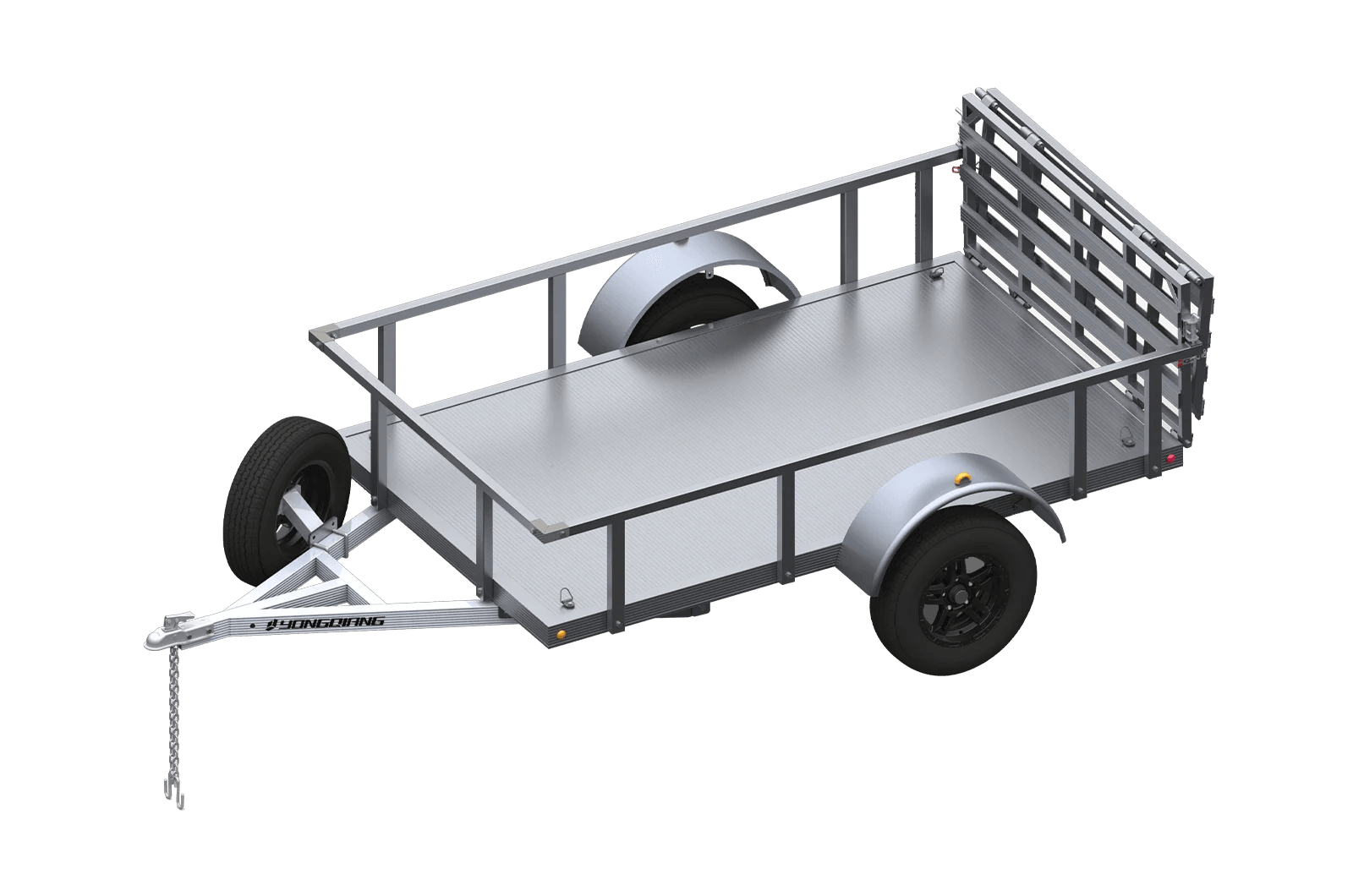
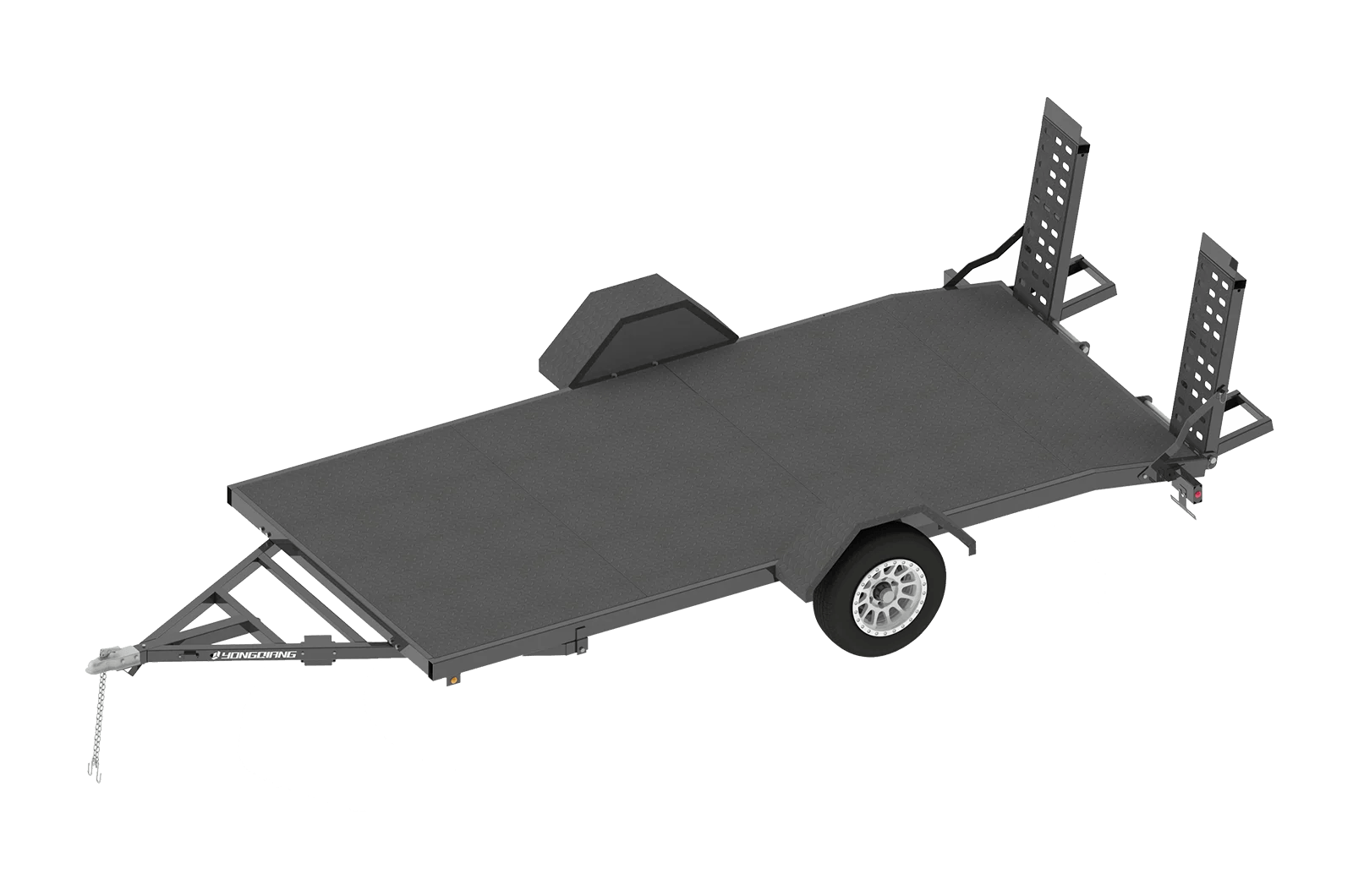
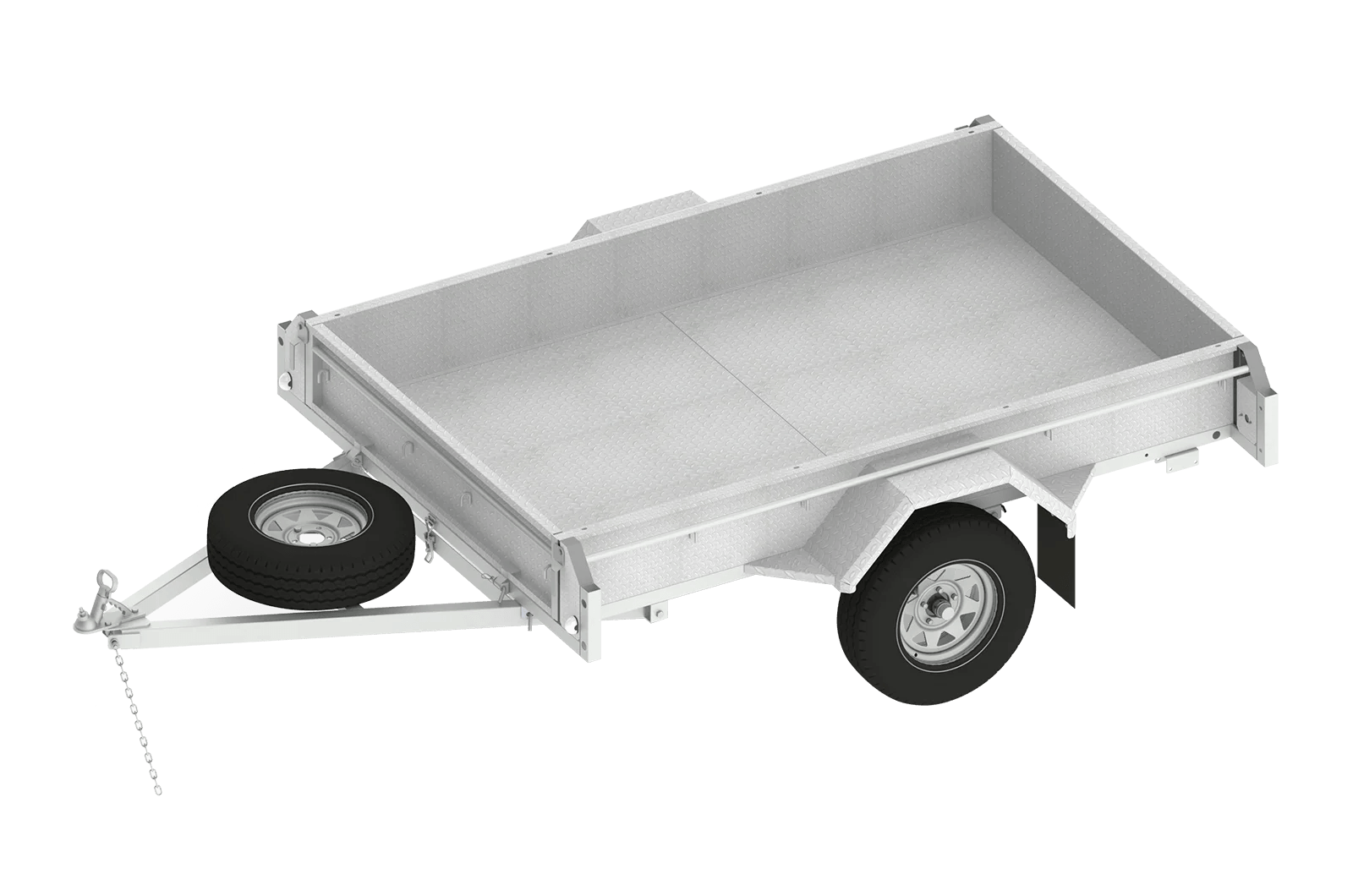
Utility Trailers Utility trailers use leaf springs for general cargo, landscaping tools, maintenance equipment, and daily transport.
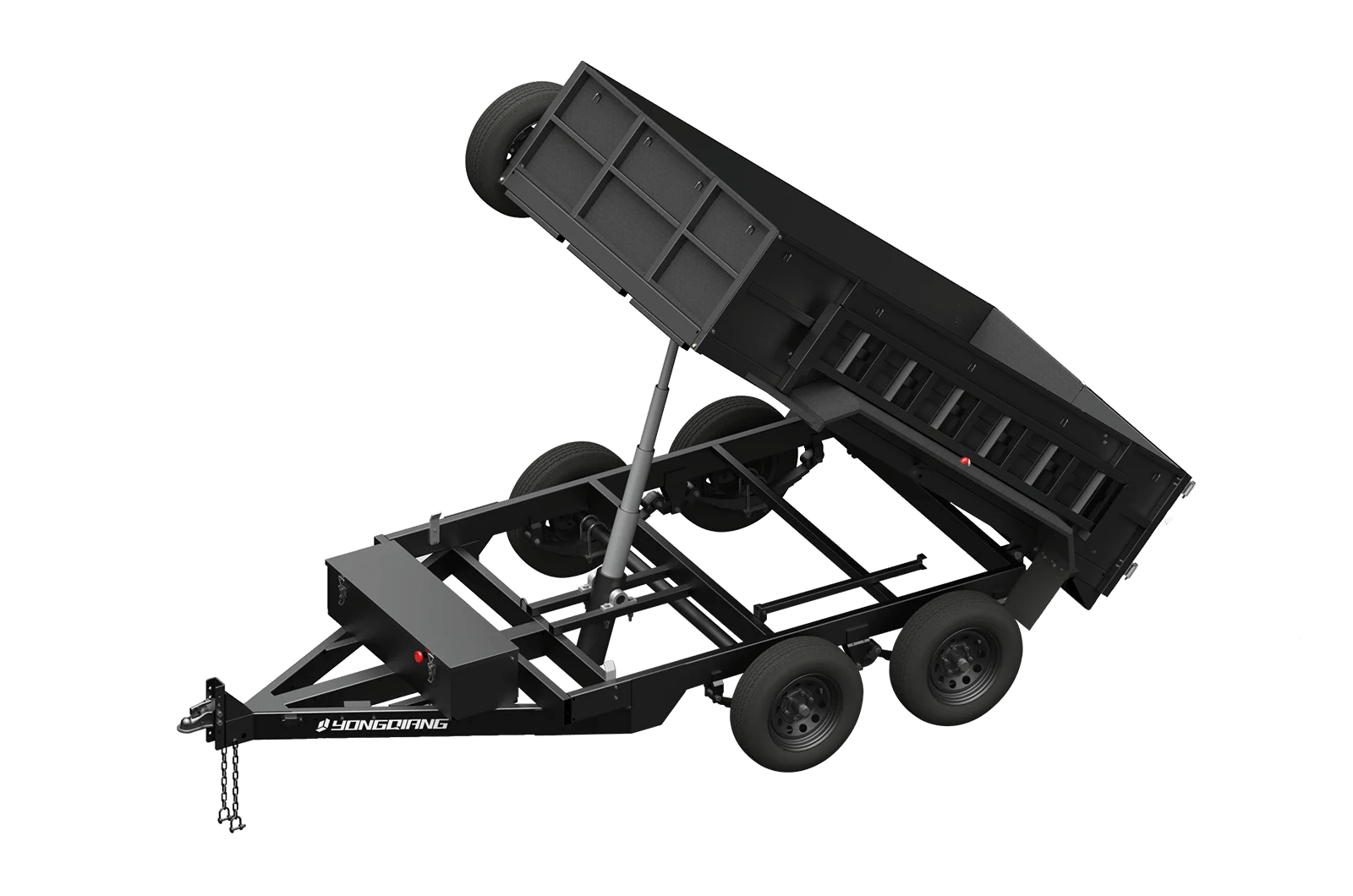
Equipment Trailers Equipment trailers need stronger springs to support machinery, compressors, compact tractors, and job-site equipment.
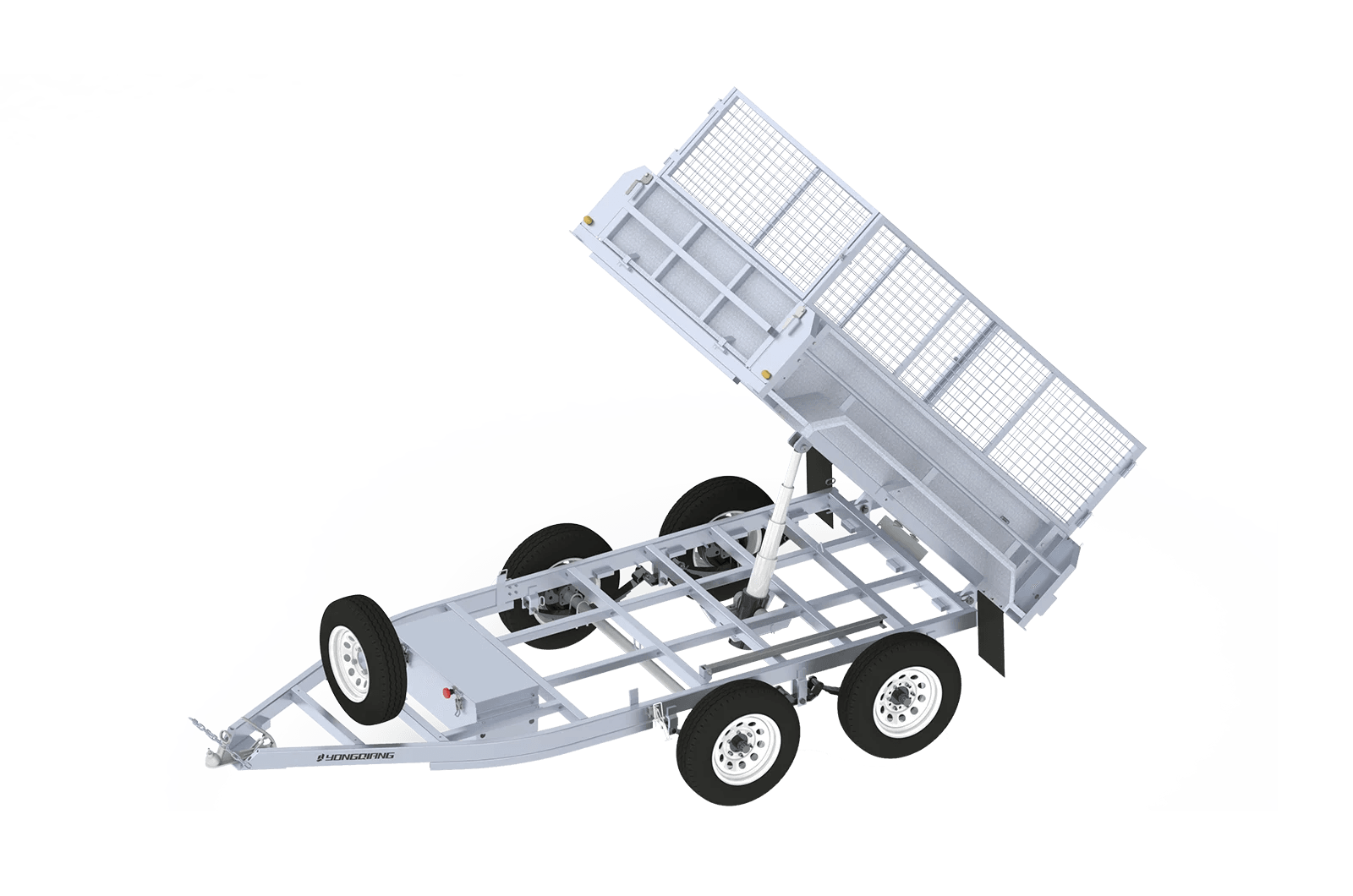
Plant Trailers Plant trailers work in construction and industrial conditions, often needing heavy-duty multi-leaf spring systems.
Skid Steer Trailers Skid steer trailers carry concentrated equipment loads, which makes spring capacity and axle alignment especially important.
Agricultural Trailers Agricultural trailers often run on uneven rural roads and fields. Strong leaf springs with corrosion protection help extend service life here.
Cargo Trailers Cargo trailers benefit from stable suspension movement and better vibration reduction during transport.
Car Haulers Car haulers need predictable suspension performance to keep vehicles protected during towing.
Maintenance Recommendations
Regular maintenance helps stretch leaf spring service life and protect the trailer suspension system overall.
- Inspect springs for cracks or broken leaves
- Check for sagging or permanent deformation
- Inspect bushings for wear
- Tighten U-bolts to correct torque
- Check shackles and hangers regularly
- Clean mud and road salt from spring surfaces
- Repair damaged coating when possible
- Avoid exceeding rated capacity
- Replace both sides together when necessary
- Inspect tyre wear for signs of axle misalignment
- Check center bolts and clamps
- Monitor unusual noise during towing
Leaf springs should get replaced if cracks, severe corrosion, broken leaves, excessive sagging, or damaged eyes turn up.
Why Factory Experience Matters
Trailer leaf springs run under constant stress from load weight, road vibration, axle movement, and repeated towing cycles. Since they tie directly into suspension safety and trailer stability, their performance depends on far more than spring shape or thickness. Material strength, heat treatment accuracy, camber control, eye forming, bushing fit, surface protection, and load-rating consistency all shape how long the product actually lasts.
Manufacturing here centers on stable engineering control paired with practical application understanding. From utility trailer leaf springs through heavy-duty trailer axle leaf spring assemblies, each product gets developed to support reliable load distribution, shock absorption, axle alignment, and long-term suspension performance.
Manufacturing priorities include:
- High-strength spring steel selection
- Controlled quenching and tempering process
- Accurate arch height and spring geometry
- Consistent fatigue resistance under repeated load cycles
- Reinforced eye and bushing structure
- Matched load rating for trailer axle systems
- Corrosion-resistant surface treatment
- ISO 9001-based production management
- DOT-related trailer application requirements
- Custom configurations for different trailer platforms
Experienced production control paired with real trailer application knowledge helps deliver leaf spring solutions that steady towing, cut vibration impact, protect axle components, and extend the working life of trailer suspension systems.
FAQ: Leaf Spring for Trailer Suspension
1. What is a trailer leaf spring? A trailer leaf spring is a curved steel suspension component that supports trailer load, absorbs road shock, and connects the axle to the trailer frame.
2. What is a utility trailer leaf spring used for? It supports the trailer frame, keeps the axle positioned correctly, reduces vibration, and improves towing stability during loaded operation.
3. What is the difference between mono-leaf and multi-leaf springs? A mono-leaf spring uses one spring plate, while a multi-leaf spring stacks several leaves together. Multi-leaf springs usually offer higher capacity and stronger impact resistance.
4. What is a double-eye leaf spring? A double-eye leaf spring has round eyes at both ends and commonly pairs with hangers and shackles on utility trailers and cargo trailers.
5. What is a slipper leaf spring? A slipper leaf spring has one fixed eye and one open sliding end, commonly used in heavier trailer suspension systems.
6. How do I choose the correct leaf spring? Check trailer GVWR, axle capacity, spring length, spring width, arch height, eye diameter, bushing size, hanger spacing, and the operating environment.
7. Can leaf springs be customized? Yes. Spring length, width, leaf count, thickness, arch height, load rating, eye type, bushing material, steel grade, and surface treatment can all be customized for different trailer designs.
8. Can leaf springs affect tyre wear? Yes. Worn, sagging, or mismatched leaf springs can cause axle misalignment and uneven tyre wear.
9. Should leaf springs be replaced in pairs? For balanced suspension performance, replacing both sides together is often the better call, especially when springs show sagging, fatigue, or uneven wear.
10. What surface finish is suitable for leaf springs? Painted, e-coated, powder coated, and galvanized finishes are all available. Galvanized or e-coated finishes work better for humid, outdoor, coastal, or salted-road environments.
