



 English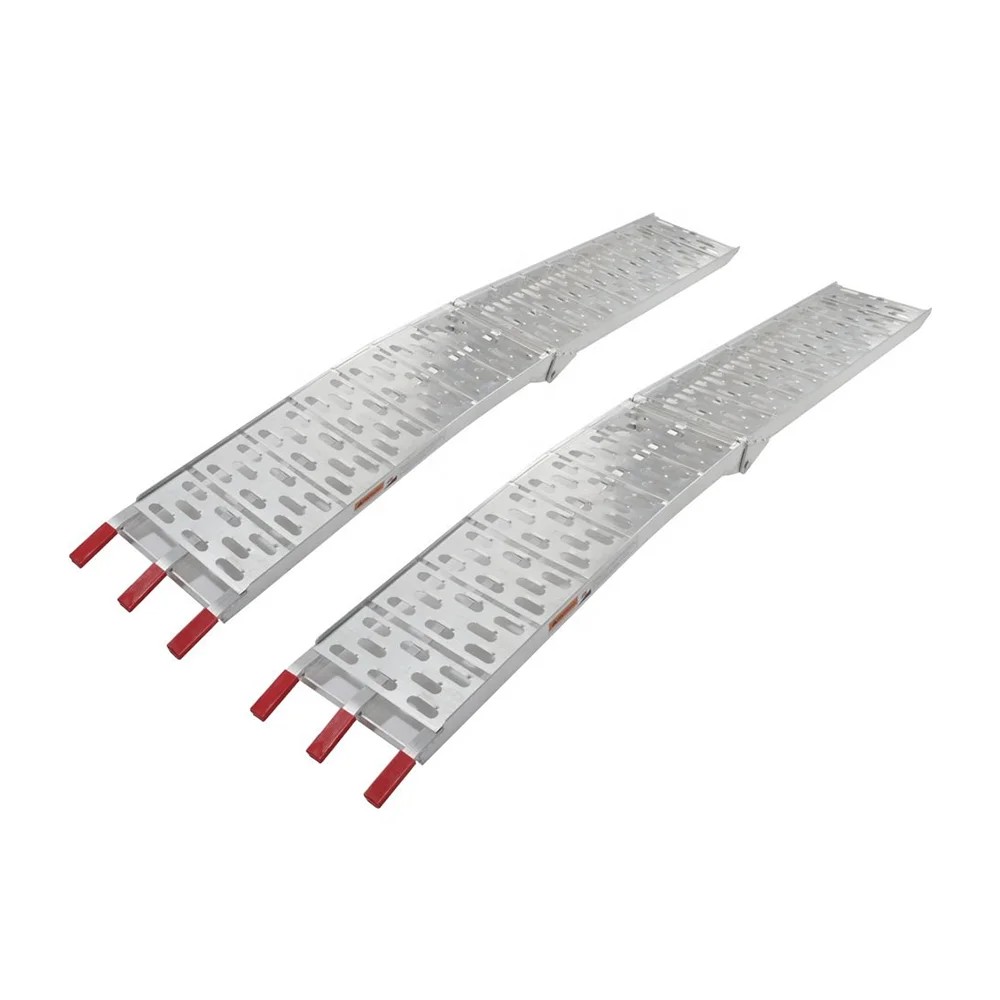



Why Lightweight Aluminum Loading Ramps Improve Trailer Safety and Efficiency
As a factory working in trailer parts and aluminum vehicle loading systems, aluminum ramps get built here for trailers, snowmobile carriers, race car trailers, equipment trailers, utility trailers, car haulers, and industrial transport platforms. A ramp isn't just a piece of metal to drive over — it directly shapes loading safety, how efficiently loading actually goes, how much payload the trailer can carry, and how long the whole system lasts.
A basic access board or a temporary loading plate won't cut it here. A ramp built to hold up needs to handle concentrated wheel pressure, resist bending mid-load, keep stable contact with the ground, and maintain grip outdoors regardless of conditions. For trailers hauling sports cars, race cars, wide-body snowmobiles, ATVs, motorcycles, lawn equipment, construction machinery, or specialty freight, how well the ramp performs ties directly into user safety and how well the vehicle itself stays protected.
Material Selection and Lightweight Performance
Aluminum shows up in modern trailer ramp systems for a simple reason — its strength-to-weight ratio beats steel by a wide margin. Ramps made from it stay much lighter than steel equivalents, which makes daily handling easier and keeps the overall trailer system from carrying unnecessary weight.
Cutting ramp weight down brings a handful of practical benefits for vehicle transport and equipment loading:
- Easier to handle manually during loading and unloading
- Lower total trailer weight
- Better payload efficiency
- Less stress placed on the trailer frame and ramp storage channels
- Improved fuel efficiency for the towing vehicle
- Less fatigue during high-frequency commercial use
High-strength aluminum extrusions suit ramp production particularly well. Extruded profiles let engineers build internal reinforcement ribs, side rails, interlocking structures, and anti-slip surfaces right into the ramp body — which keeps the structure stable without piling on extra weight.
Aluminum also resists corrosion naturally. Exposed to air, it forms its own protective oxide layer that fights off rust — which is exactly why aluminum ramps hold up so well on outdoor trailer systems that deal with rain, road salt, snow, humidity, coastal air, and other high-salinity conditions.
Structural Design of Aluminum Trailer Ramps
Getting a ramp's structure right means balancing strength, weight, traction, and how well it fits the installation — which means looking at the whole ramp system, not just the surface panel.
A well-built aluminum ramp typically includes:
- Reinforced aluminum extrusion body
- Anti-slip punched or raised surface
- Side reinforcement rails
- Hinge or hook connection system
- Ground contact transition edge
- Safety stop or positioning structure
- Interlocking deck compatibility
- Slide-out storage compatibility
- Optional handle design
- Optional folding structure
Each of these details shapes how the ramp actually performs in use. Side rails improve resistance to bending, the anti-slip surface gives tires, shoes, and equipment wheels something to grip, and the transition edge smooths out the move from ground level up to deck height — cutting down on impact during loading.
For hidden slide-out ramp systems, getting the dimensions right matters even more. The ramp has to slide into the trailer frame or storage track cleanly, without excess play or unnecessary friction — which means keeping tight control over extrusion size, cutting length, surface finish, and assembly tolerance.
Anti-Slip Surface and Loading Safety
Traction sits near the top of the safety list for aluminum ramps. Tires hit the ramp surface under all kinds of conditions during loading — dry pavement, wet ground, mud, snow, dust — and a smooth metal surface turns slippery fast if the surface design isn't handled carefully.
Common approaches to anti-slip design include:
- Raised dot surface
- Perforated traction holes
- Serrated patterns
- Embossed grip texture
- Cross-rib surface design
- Open-grip punched structure
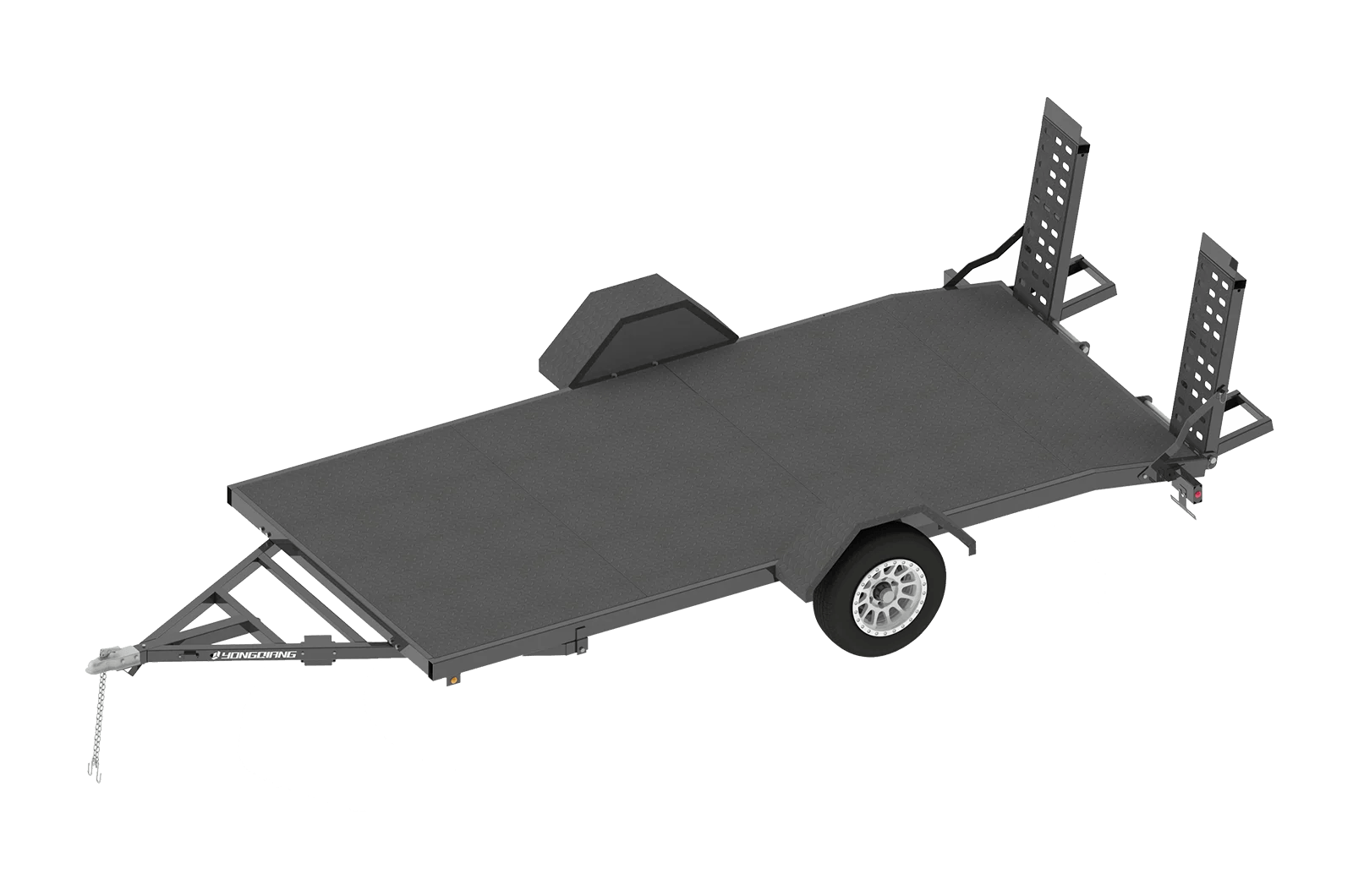
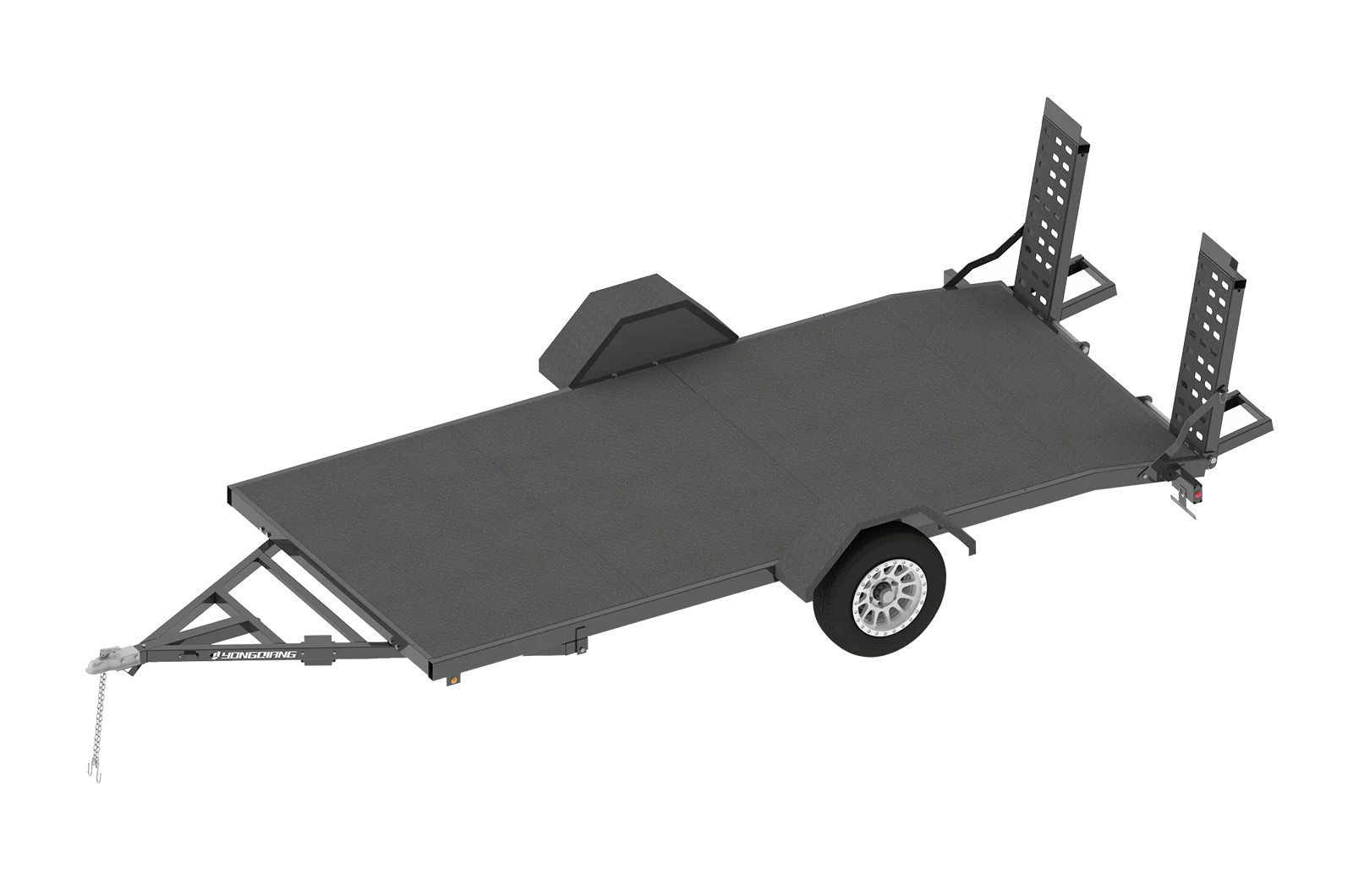
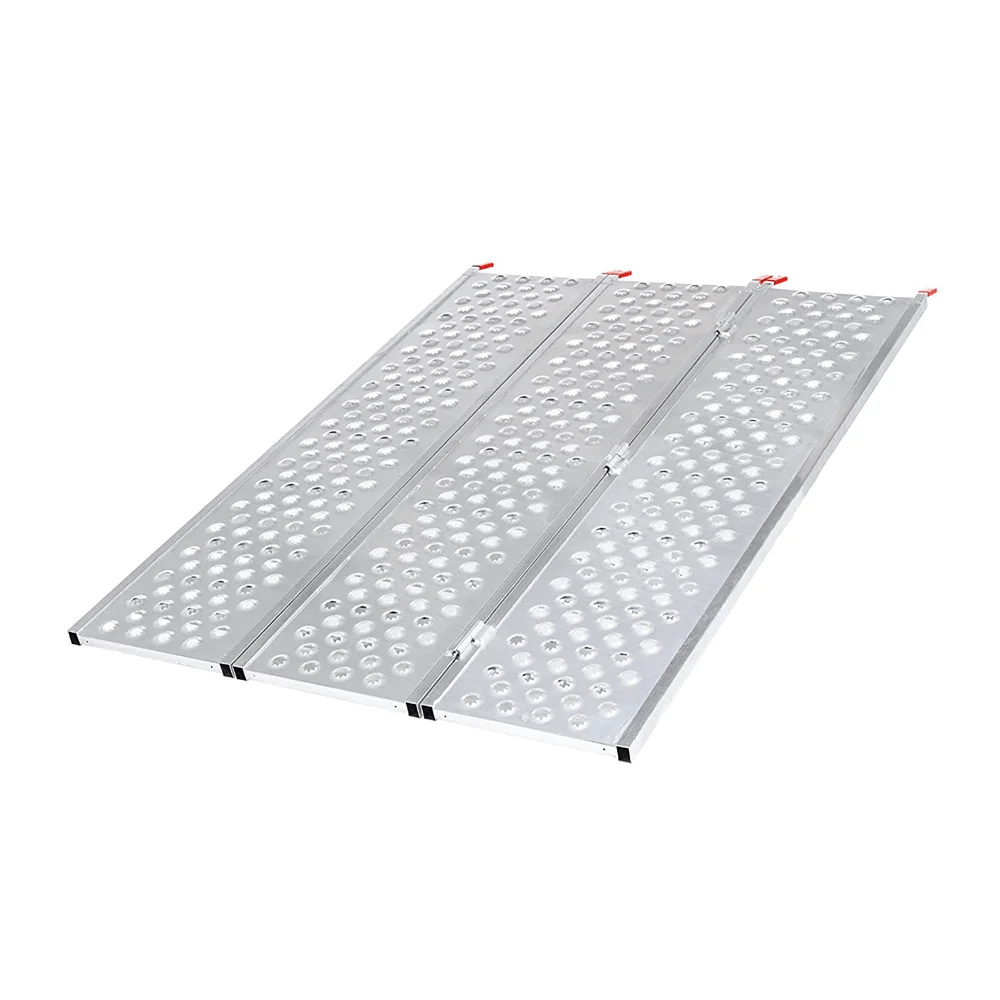
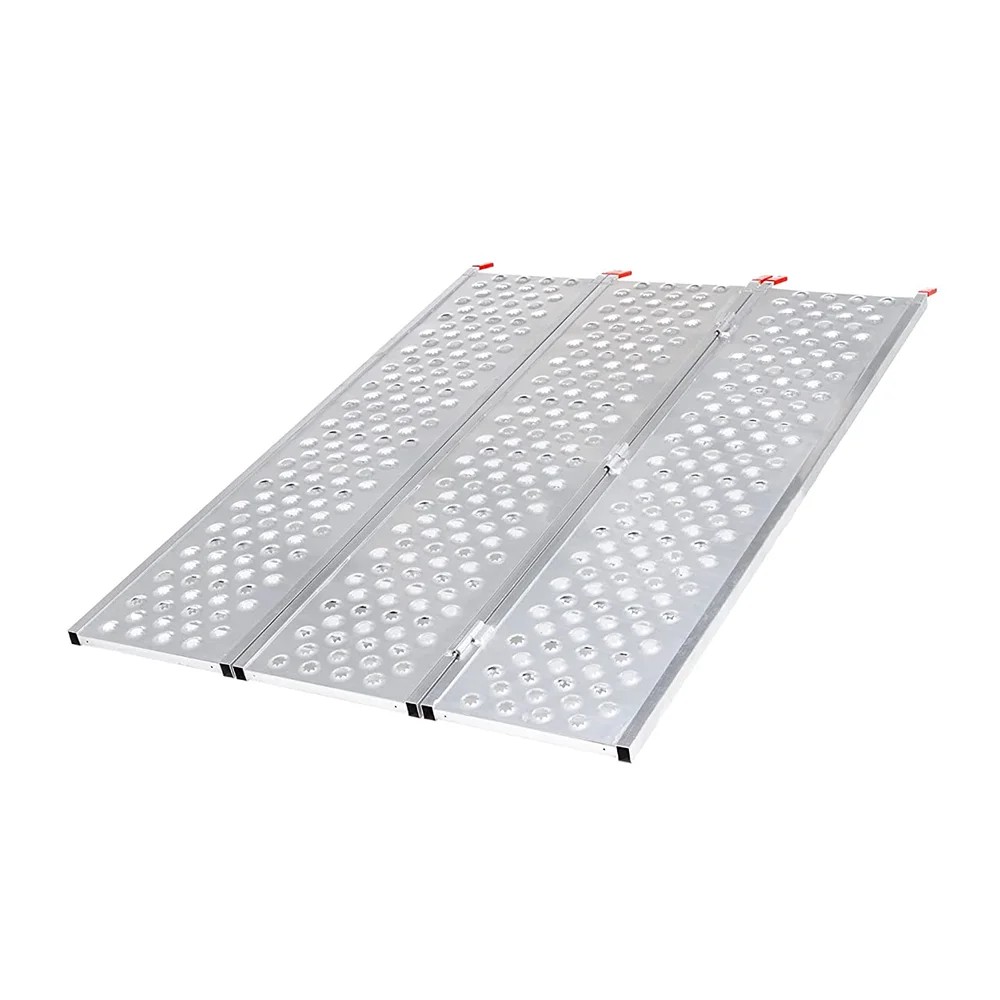
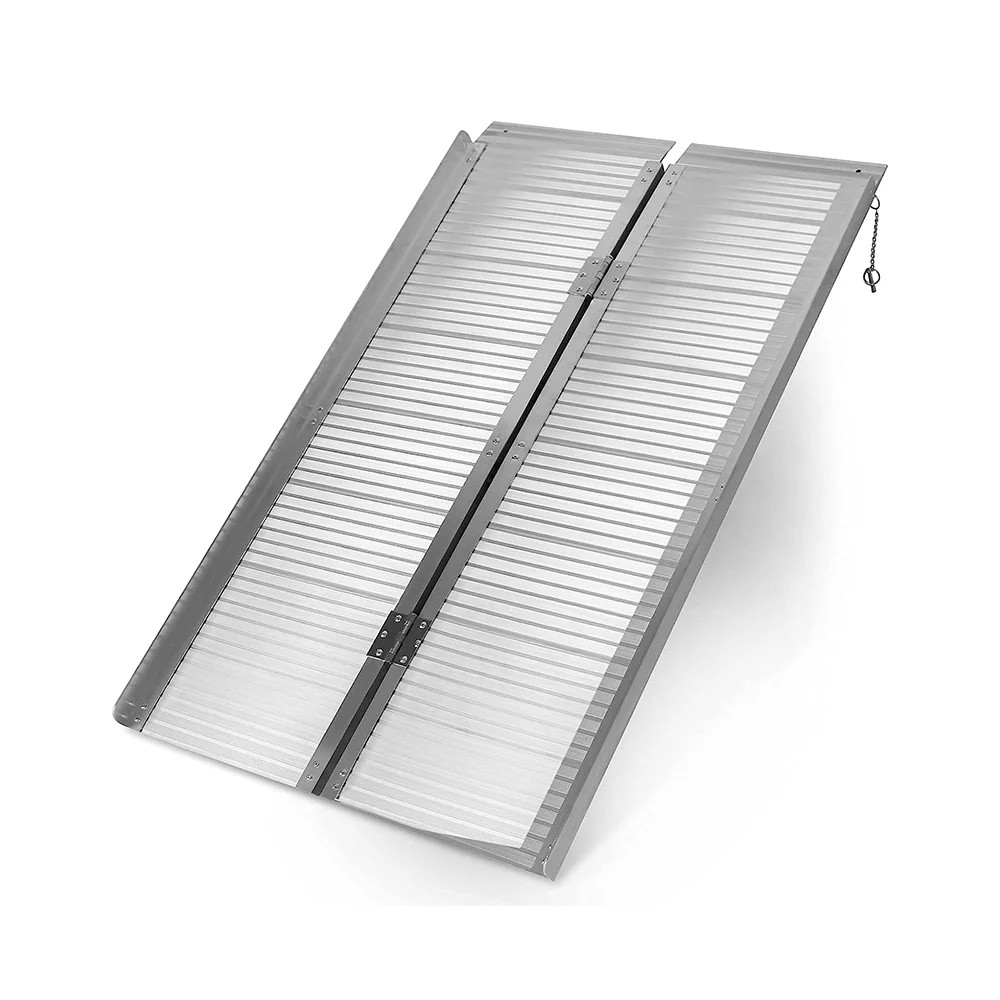
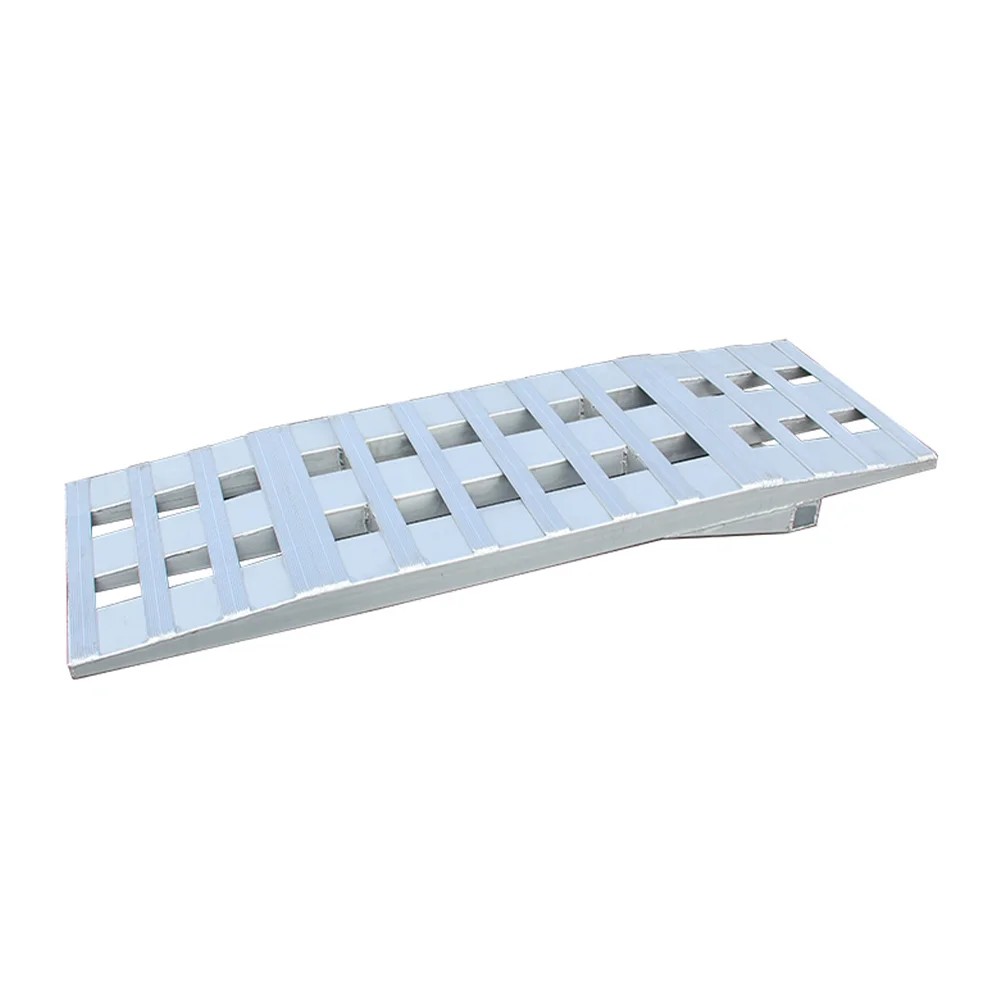
The ramp shown here uses a raised anti-slip pattern across the aluminum surface, which boosts tire grip and foot traction while keeping the whole thing light. It suits loading tasks involving snowmobiles, small vehicles, motorcycles, ATVs, carts, and light equipment well.
Traction matters even more for snowmobile trailer ramps specifically, since loading often happens in wet, icy, or snowy conditions. A grip design that's actually thought through cuts down on slipping and gives operators more control during loading and unloading.
Load Capacity and Engineering Evaluation
Load capacity ranks among the most important specs for any aluminum ramp. It needs to handle not just the static weight of whatever's being loaded, but the dynamic force generated as that weight moves.
Several factors shape a ramp's load capacity:
- Aluminum alloy grade
- Material thickness
- Extrusion profile design
- Ramp length and width
- Reinforcement rib structure
- Distance between support points
- Wheelbase and tire contact area
- Loading angle
- Welding or connection quality
- Ground contact stability
Static weight and dynamic loading aren't the same thing. Once a vehicle starts moving onto the ramp, force concentrates right at the tire contact points, and sudden acceleration, braking, uneven ground, or misalignment can all push more stress onto the ramp structure than a static number would suggest.
Ramp strength gets evaluated here through structural design, material control, and load testing — factory load test reports help back up product reliability and give trailer integration projects something concrete to work from.
Typical trailer applications often fall somewhere in the 2,200 lbs to 3,500 lbs GVWR range, though payload needs shift depending on the trailer model and what's actually being transported. Picking the right aluminum ramp always comes back to the actual application, deck height, what's being loaded, and how much safety margin makes sense.
Types of Aluminum Ramps
Different trailer and equipment applications call for different ramp structures, so several aluminum ramp configurations get built to match various transport platforms.
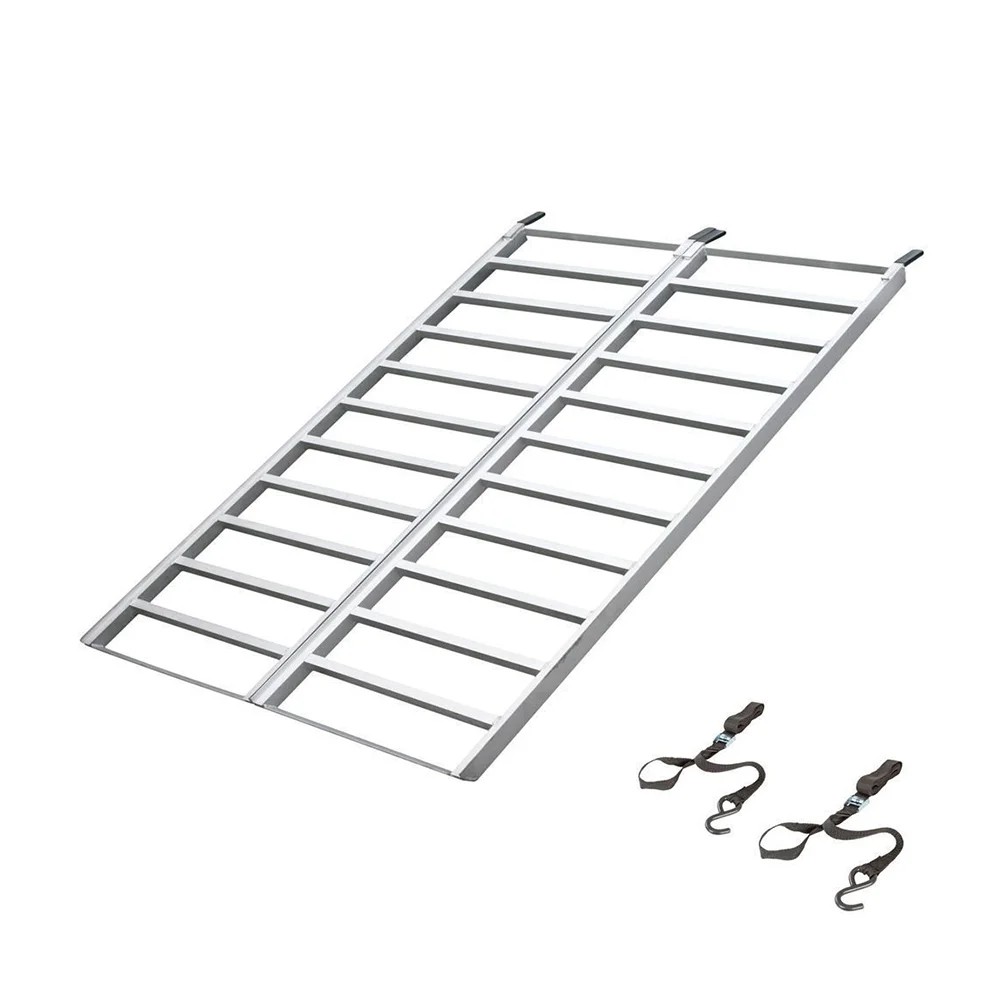
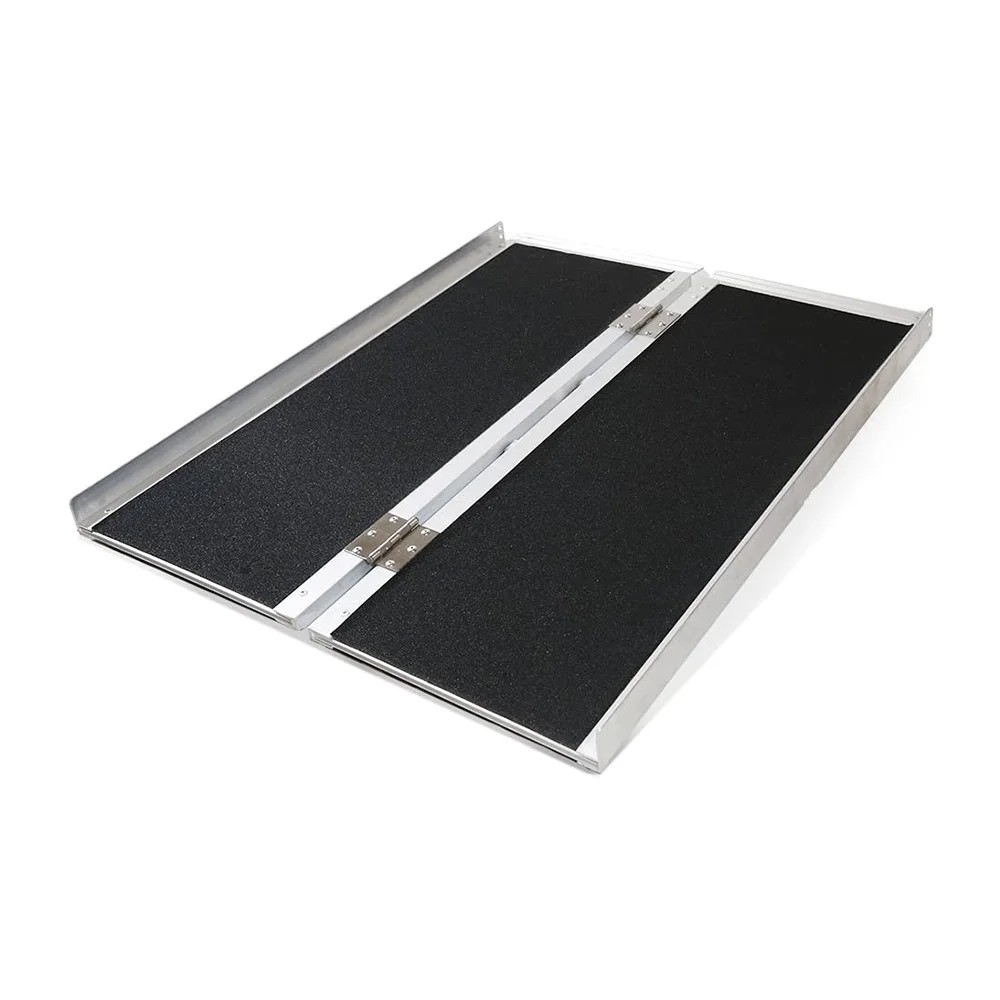
Folding Aluminum Ramp Built for compact storage and easy handling, folding ramps work well for utility trailers, ATV trailers, motorcycles, light equipment, and general access needs. The folding design cuts down storage length without sacrificing loading performance.
Portable Aluminum Access Ramp Light and easy to move around, portable ramps suit temporary loading tasks, service vehicles, small trailers, workshops, and mobile equipment use. Flexibility is really the main selling point here.
Wide Load Aluminum Ramp Built for a bigger contact area and steadier loading, wide ramps suit snowmobiles, wide-body vehicles, garden machinery, compact equipment, and specialty cargo well.
Reinforced Off-Road Loading Ramp Off-road use calls for a tougher build, since equipment often brings larger tires, uneven weight distribution, and generally more demanding loading conditions. Reinforced ramps hold up better against bending and impact in these situations.
Heavy Load Construction Ramp Built for more demanding equipment — compact machinery, maintenance equipment, jobsite transport tools — construction ramps need stronger profiles, reinforced edges, and a bigger safety margin than lighter-duty designs.
Slide-Out Aluminum Trailer Ramp Commonly built into premium trailer systems, slide-out ramps tuck under the trailer deck to save space and keep the look clean. Getting the dimensions exact and the sliding action smooth matters a lot for this configuration to work well.
Applications of Aluminum Ramps
Aluminum ramps turn up across trailer manufacturing, motorsport transport, outdoor recreation, equipment logistics, and commercial vehicle systems generally.
Sports Car and Race Car Trailers Low-profile sports cars and race cars need a smooth loading angle and steady ramp support. Aluminum ramps keep trailer weight down while giving a clean, professional loading setup — surface traction and a well-designed transition edge matter here to protect tires, bumpers, and underbody components.
Snowmobile Trailers Snowmobile ramps need to hold up in cold, wet, slippery conditions. Aluminum resists corrosion from snow, ice, and road salt well, and wide ramp designs paired with anti-slip surfaces prove especially useful for this kind of loading.
ATV and Motorcycle Trailers For ATVs, motorcycles, and other recreational vehicles, ramp weight and grip end up being the main concerns — lightweight aluminum ramps are easy to handle and give reliable loading access.
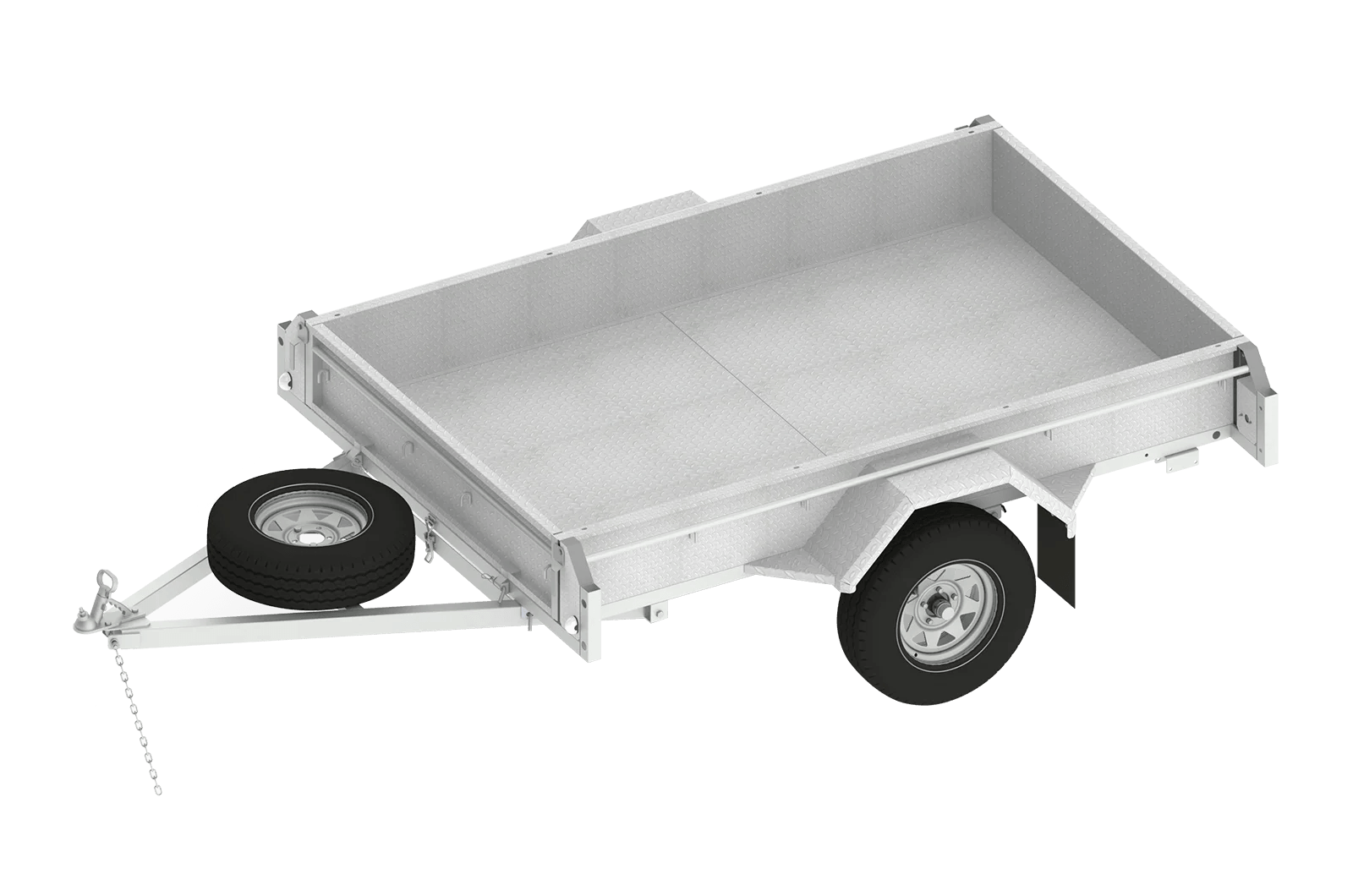
Utility and Equipment Trailers Utility trailers often carry lawn mowers, compact machinery, maintenance equipment, and service tools. Aluminum ramps speed up loading while keeping the overall trailer structure lighter.
Industrial and Commercial Transport In commercial settings, ramps might get used many times a day. Durability, low maintenance, corrosion resistance, and consistent performance become the priorities — aluminum ramps hold up well under that kind of repeated, high-frequency use.
Custom Manufacturing Options
Ramp solutions can be developed around trailer structure, load requirements, installation method, and the application at hand. Standard models cover common trailer systems fine, but specialized vehicle platforms often need something custom.
Customization can cover:
- Ramp length
- Ramp width
- Aluminum profile thickness
- Load rating design
- Anti-slip pattern
- Folding structure
- Fixed or removable connection
- Hook-end or hinge-end design
- Slide-out storage compatibility
- Surface finish
- Reinforced side rail design
- Handle position
- Trailer deck matching
- Packaging method
- Logo or identification plate
For trailer integration to go smoothly, ramp dimensions need to line up with deck height, frame width, mounting points, storage channels, and loading angle. Good coordination on the engineering side makes installation faster and loading safer.
Manufacturing Process and Quality Control
Producing aluminum ramps properly means keeping tight control over materials, dimensions, structure, and surface quality throughout. The production process here focuses on consistency and safety at every stage.
Main Production Steps
Aluminum Material Selection High-strength aluminum profiles or sheets get chosen based on the ramp's load requirements and intended use.
Extrusion Profile Preparation Extruded aluminum sections get checked for straightness, surface quality, and dimensional accuracy.
Cutting and Machining Ramp components are cut to specified lengths within controlled tolerances.
Punching or Surface Processing Anti-slip holes, raised traction points, or grip patterns get formed according to the ramp design.
Welding and Assembly Reinforcement sections, side rails, hinges, hooks, handles, and connection parts get assembled with careful attention to strength and alignment.
Surface Inspection The ramp surface gets checked for deformation, sharp edges, burrs, scratches, and overall finish quality.
Load Testing and Functional Check Ramp strength, bending resistance, connection stability, and installation compatibility can all be verified according to project needs.
Protective Packaging Packaging gets designed to prevent surface damage, edge deformation, and movement during transport.
Main Inspection Points
- Material grade and thickness
- Ramp length and width
- Profile straightness
- Surface traction consistency
- Welding seam quality
- Hinge or hook strength
- Side rail alignment
- Load-bearing performance
- Edge finishing and burr removal
- Fit with trailer structure
- Packaging protection
A ramp worth trusting needs to do more than just look clean — it has to perform safely under loads applied over and over.
Compliance and Documentation Support
For trailer parts headed to export markets, technical documentation and manufacturing consistency matter a great deal. Aluminum ramps here can be produced under ISO 9001 quality management procedures, which supports stable production control and traceable inspection.
For North American trailer systems specifically, DOT-related requirements, WMI/VIN management support, and factory load test reports often come into play once ramps get integrated into complete trailer platforms. This documentation helps with product evaluation, trailer configuration management, and confidence in long-term reliability.
Aluminum Ramp vs Steel Ramp
Both aluminum and steel ramps serve loading applications, but they suit different priorities. Aluminum tends to win out when lightweight handling, corrosion resistance, and trailer payload efficiency matter most.
| Feature | Aluminum Ramp | Steel Ramp |
|---|---|---|
| Weight | Lightweight, easy to handle | Heavier, harder to move |
| Corrosion Resistance | Naturally rust resistant | Needs coating or galvanizing |
| Maintenance | Low maintenance | May need rust prevention |
| Payload Efficiency | Helps reduce trailer weight | Adds more structural weight |
| Appearance | Clean metallic finish | Usually painted or coated |
| Outdoor Use | Holds up well in humid, coastal regions | Rust risk once coating gets damaged |
| Handling Efficiency | Better for frequent operation | More labor-intensive |
For trailers that see frequent loading and unloading, aluminum ramps carry a real advantage in day-to-day usability and long-term corrosion resistance.
Maintenance Recommendations
Aluminum ramps don't ask for much upkeep, but checking them regularly helps stretch out their service life and keep them safe to use.
- Clean off mud, snow, salt, and debris after use
- Check the anti-slip surface for damage or excessive wear
- Inspect hinges, hooks, and mounting points regularly
- Make sure ramp ends sit firmly on the ground before loading
- Avoid exceeding the rated load capacity
- Keep the ramp aligned with the vehicle wheels while loading
- Store removable ramps securely when they're not in use
- Check for bending or deformation after any heavy impact
- Clear sharp debris off the ramp surface
- Use a suitable loading angle for low-clearance vehicles
A ramp that's kept up well can keep delivering reliable performance for trailer loading over the long haul.
Aluminum ramps have become a core piece of modern trailer and vehicle loading systems. Their light structure, strength, corrosion resistance, anti-slip surface, and how customizable they are make them a fit for sports cars, race cars, snowmobiles, ATVs, motorcycles, equipment trailers, utility trailers, and commercial transport platforms alike.
Building them well comes down to material quality, extrusion design, load-bearing performance, anti-slip safety, dimensional precision, trailer compatibility, and durability that holds up over time. With the engineering and manufacturing control done right, aluminum ramps can speed up loading, keep trailer weight down, improve safety, and perform dependably in demanding outdoor and commercial settings.
