
-
North America Models
-
Oceania Models

 English
What Features Make a Heavy-Duty Dump Trailer Suitable for Construction Work
Heavy-Duty Frame Construction for Demanding Job Site Conditions
Construction haulage loads the trailer structure repeatedly: gravel, sand, broken concrete and mixed demolition debris land in the bed with impact, then shift under braking and on uneven site roads. Frame strength is the backbone that keeps the trailer tracking true and the dump pivot aligned through those cycles. Material choice for main rails, the arrangement of crossmembers and the way side and end structures tie into the rails all influence how much twist and local bending the chassis tolerates before components loosen or crack.
Reinforced structural connections at high-stress nodes matter because loading and unloading are not gentle laboratory events. Welds, gussets and bolted joints that are designed for repeated cycles support longer service under real site use. Dump Trailer frame construction and structural design for demanding material transport tasks aim at that durability: a chassis that stays square so that the bed dumps cleanly and the axles remain in line. Strength without sensible weight distribution still harms towability; the frame must be adequate for the rated work, not arbitrarily massive.
Practical Payload Capacity for Construction Material Transport Needs
Payload capacity sets how much material moves per trip and therefore how many cycles a given job requires. Trailer dimensions, side height and axle configuration interact with the rated load: a long bed can hold volume that exceeds what the axles and tyres should carry if the material is dense, while a short bed may force extra trips for bulky but lighter waste. Selecting an appropriate payload rating according to the usual material density and the tow vehicle's limits avoids chronic overload.
Available load capacity configurations and practical cargo space should be read together. Operators need room to load with a bucket or by hand without constant spillage over the sides, yet the rating must remain honest relative to axles, frame and hitch. A Heavy-Duty Dump Trailer specification is only as useful as the discipline that keeps daily loads inside that rating on real jobs, not only on the plate.
Reliable Hydraulic Lifting System for Efficient On-Site Unloading
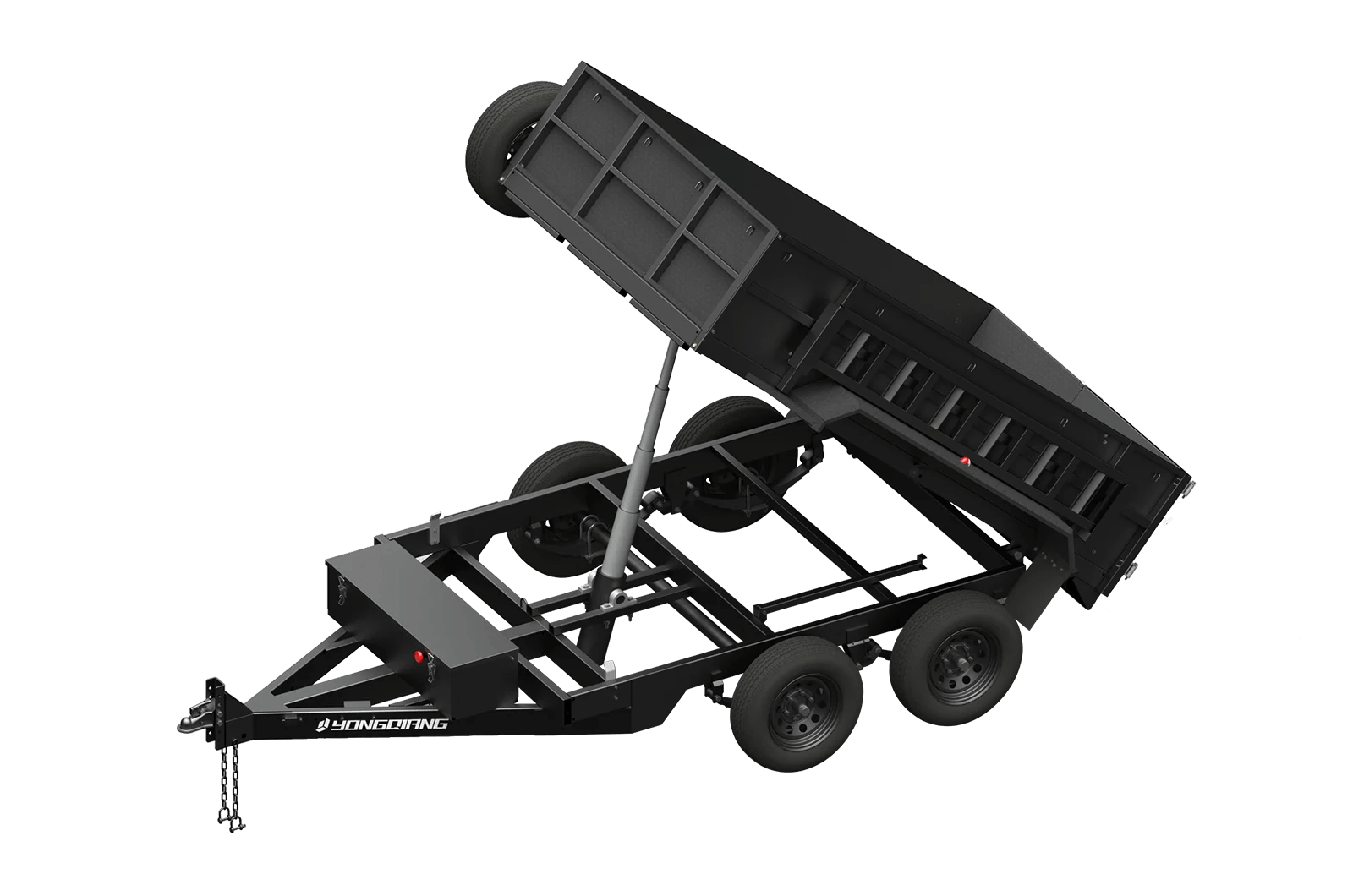
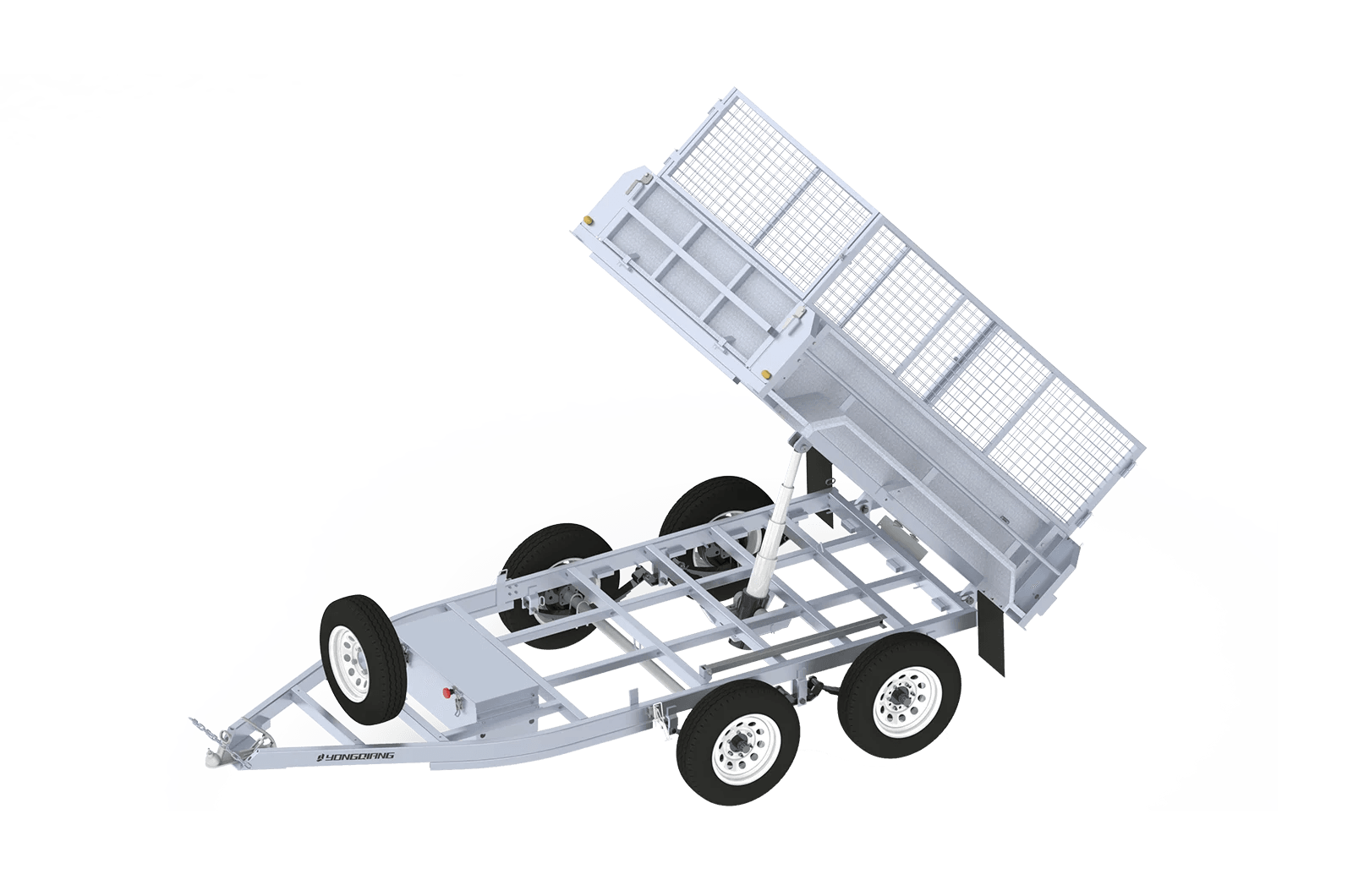
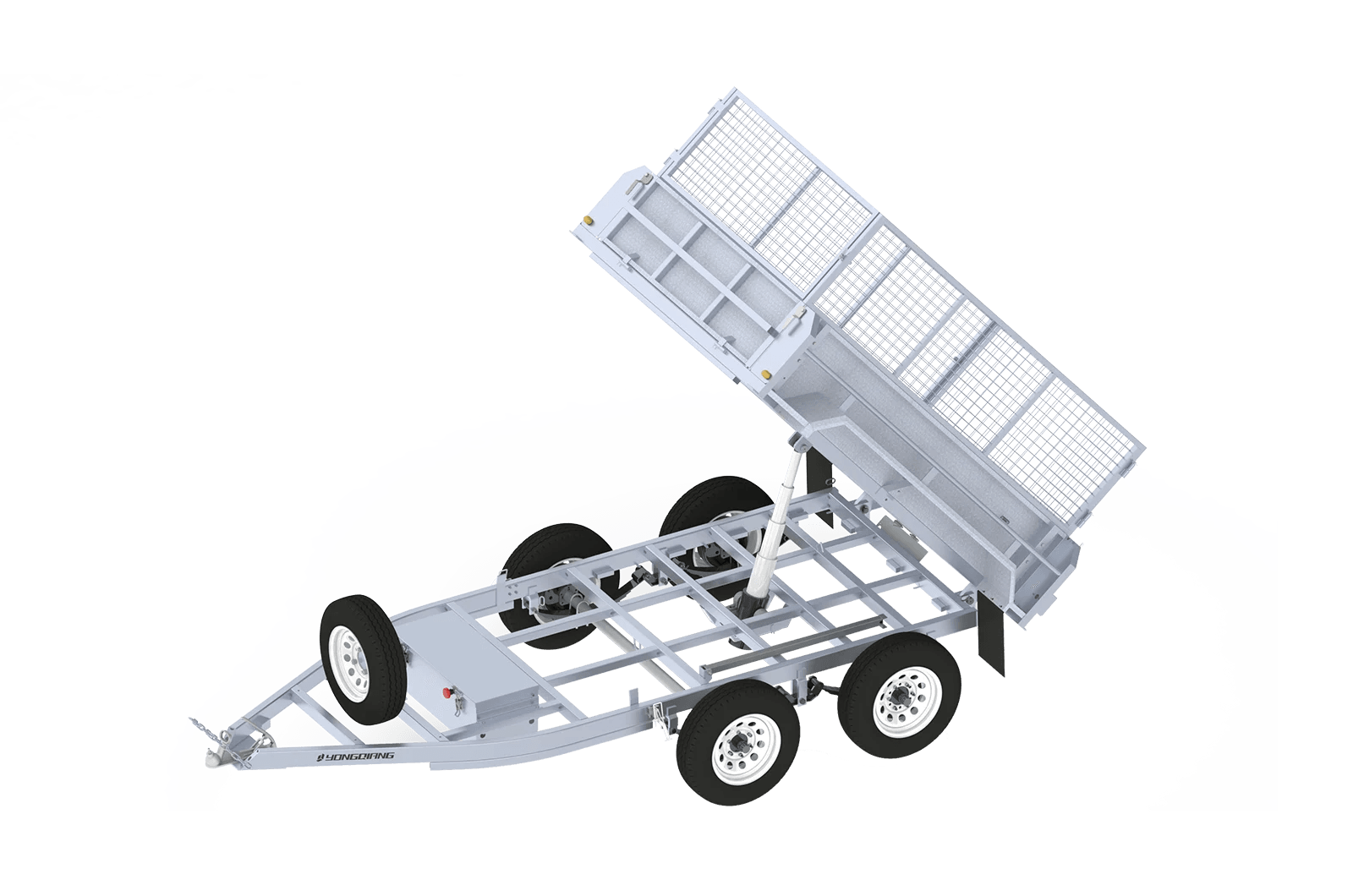
The hydraulic system raises the dump bed so that gravity and the bed angle discharge bulk material without shovelling the entire load by hand. Cylinder size, mounting geometry and the stability of the hoist frame influence how smoothly the bed rises, how evenly it sits at full tip and how controllably it returns. Stable lifting movement matters when gravel or sand can surge suddenly as the angle increases; a hesitant or skewed hoist increases spill risk and side loading on the hinges.
Hydraulic dumping design helps operators unload with less manual handling when the power unit, hoses and cylinder are maintained and the bed pivots freely. Efficient unloading is not only speed; it is predictable motion that lets the driver place the load where the job needs it. Leaks, air in the system or bent pivot pins turn a quick dump into a delay and a safety concern.
Durable Dump Bed Design for Repeated Loading and Discharge
Abrasive materials scour floor and side sheets. Thickness, material grade and how the sheets are supported by longitudinals and cross members affect how long the bed contains cargo without bowing or wearing through at high-traffic spots. Bed design also guides discharge: smooth transitions, appropriate side angles and a tail arrangement that opens or yields as intended reduce hang-up of sticky soils and bridging of mixed debris.
Reinforced bed structures support regular loading and unloading cycles when impact from excavator buckets is anticipated in the design. Dump bed construction focused on structural durability and practical material handling keeps the cargo envelope working through a construction season rather than requiring early patching. Floor wear plates or local reinforcement, where part of the design, extend life in the zones that see the most scrape and impact.
Stable Axle and Suspension Configuration for Site and Road Travel
Axle count and rating distribute the loaded weight and influence tyre loading and legal classification of the combination. Suspension components cushion shocks from potholes, kerbs and rough haul roads so that frame and cargo see fewer sharp peaks. Matching axle ratings to the intended payload prevents chronic overload of bearings, spindles and tyres even when the bed looks only “mostly full” with dense stone.
Axle and suspension configuration options accommodate different construction transportation requirements when the buyer states typical material, distance and road quality. Softer setups may favour rough tracks; firmer setups may favour stability at higher empty return speeds. Neither replaces correct tyre pressure and load placement. Stability is the product of ratings, condition and how the trailer is loaded front-to-rear and side-to-side.
Practical Towing Design for Flexible Construction Applications
Hitch compatibility determines whether a given truck can legally and safely couple to the trailer. Bumper-pull arrangements connect to a suitable receiver and ball or equivalent on the tow vehicle and are common where pickup-class trucks handle moderate dump trailers. Matching trailer empty weight, loaded weight and the vehicle's towing and payload capacity is a hard constraint: excess tongue weight or gross weight overloads the truck regardless of how strong the trailer frame is.
Bumper-Pull Dump Trailers configured for construction offer a practical towing solution for compatible pickup trucks and other properly rated vehicles when lighting, brakes and safety chains meet the regulations of the operating region. Flexible application means the same trailer can move stone in the morning and carry debris in the afternoon only if the hitch, brakes and ratings remain appropriate for both loads.
Construction Demands and Trailer Feature Response
| Construction demand | Trailer feature focus | Operating note |
|---|---|---|
| Heavy, abrasive bulk loads | Strong frame; durable bed | Avoid impact loading beyond design intent |
| Fewer trips / useful volume | Payload rating; bed size | Respect density; do not exceed plate rating |
| Fast, controlled discharge | Hydraulic hoist stability | Maintain fluid, pins and power unit |
| Repeated load cycles | Reinforced bed and pivots | Inspect welds and floor wear |
| Mixed site and road surfaces | Axles and suspension matched to load | Check tyre ratings and pressure |
| Coupling to common work trucks | Bumper-pull hitch compatibility | Verify truck tow capacity and brake requirements |
Specification and Use Discipline on Real Jobs
Suitability for construction is proven in daily routine: loading within rating, dumping on stable ground, securing the bed before travel and inspecting pins, hoses and lights at sensible intervals. OEM and ODM discussions around dimensions, payload, frame and bed build, hydraulics, axles and bumper-pull hitch layout help align a Dump Trailer with the contractor's typical materials and tow fleet. Clear specification up front reduces mismatch after delivery.
Frame, Payload, Hoist, Bed, Axles and Hitch for Site Haulage
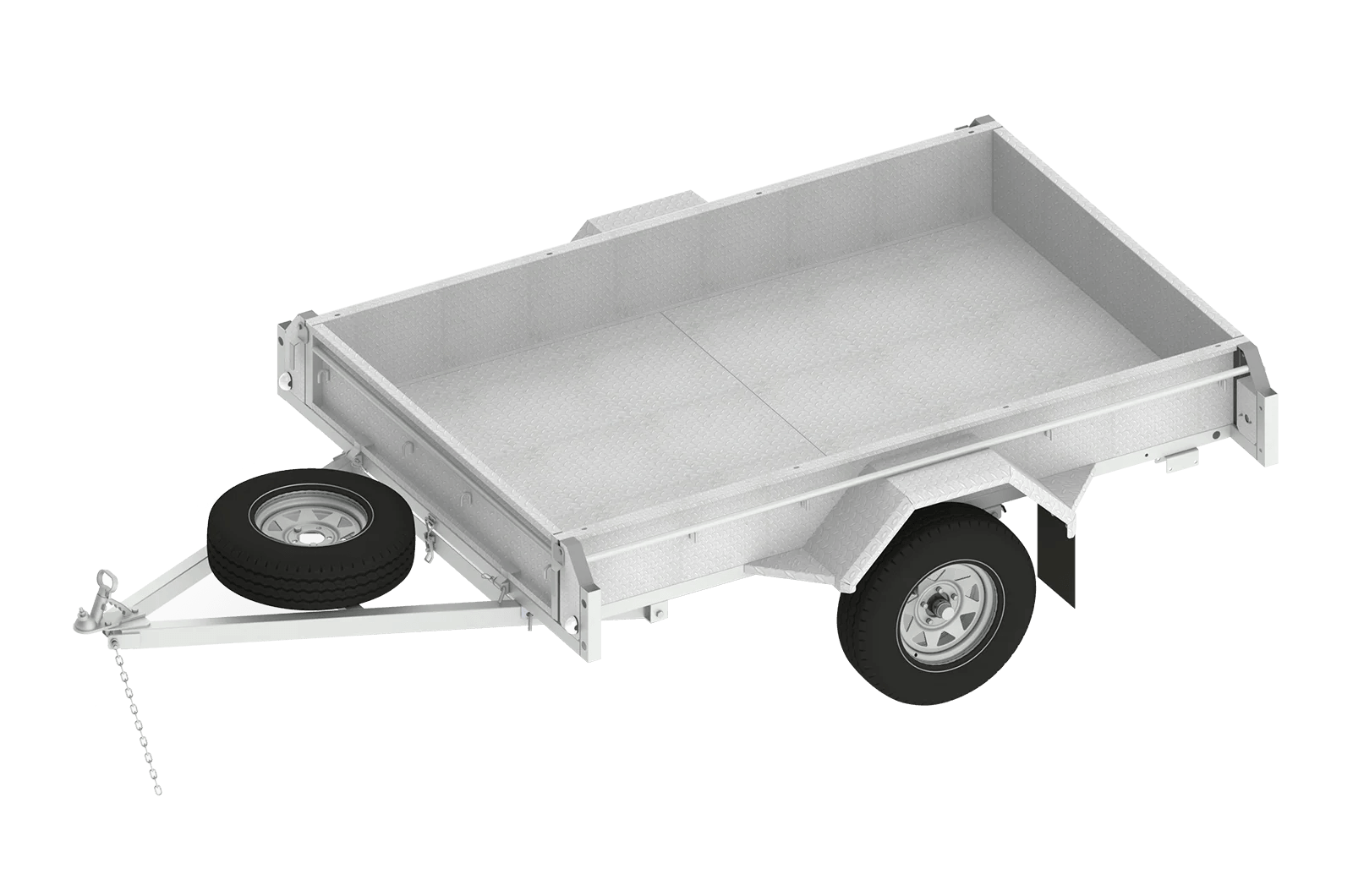
A heavy-duty dump trailer suits construction work when frame strength, practical payload capacity, a reliable hydraulic lift, a durable dump bed, appropriate axles and suspension and a compatible towing arrangement work together under abrasive bulk materials and repeated cycles. Dump Trailer configurations built around those features support gravel and sand haulage, debris removal and on-site unloading for crews that match equipment ratings to the job. YONGQIANG produces dump trailers including heavy-duty and bumper-pull oriented designs for construction material transport. Review of payload needs, tow vehicle limits, bed and frame construction, hydraulic layout and axle options against typical site materials supports selection of a trailer suited to demanding construction haulage.
- Trailer
- Utility Trailer
- Dump Trailer
- Boat/Watercraft Trailer
- Aluminum Trailer
- Equipment Trailer
- Box Trailer
- Hydraulic Tipper Trailer
- Boat Trailer
- Specialist Trailer
- Caravan
- Off Road Caravan - Crest 16
- On Road Caravan - Trekker 19
- On Road Caravan - Trekker 22F
- Pop-top Caravan - Pod 15C
- Trailer Parts
- All Parts
- Contact Us
-
- No.888 South Longqian Ave, Bailongqiao Town Jinhua Zhejiang, China
-
+86-579-82217008
+86-579-82221688 -
sales@yqtrailer.com
 High-Quality Trailers & Caravans Manufacturer