
-
North America Models
-
Oceania Models

 English
What Is the Hot Dip Galvanizing Process for Trailer Wheel Rims
What Is Hot Dip Galvanizing?
Understanding the Hot Dip Galvanizing Process
Hot dip galvanizing coats prepared steel by immersing it in molten zinc so that zinc metallurgically bonds to the surface. On trailer wheel rims the aim is a continuous metallic layer that stands between the steel and moisture, road dirt and outdoor air. Once formed, the coating limits direct contact between the steel and corrosive agents and supports longer service in wet and outdoor duty than bare steel alone.
Why Galvanizing Is Used for Trailer Wheel Rims
Trailer rims spend much of their life outdoors. Rain, standing water, road spray, mud and coastal air all encourage rust on unprotected steel. Corrosion weakens appearance first and, if left unchecked, can affect the rim surface and related interfaces. A galvanized coating is applied so that the steel rim carries its own corrosion barrier into boat, utility and agricultural service, where repainting is often difficult and exposure is continuous.
What Are the Main Steps in the Hot Dip Galvanizing Process?
Surface Preparation and Degreasing
Oil, grease and shop soils are removed so that later chemical steps and the zinc bath can wet the steel evenly. Contaminants left on the surface cause bare spots, rough areas or poor bonding. Cleanliness at this stage sets the foundation for a uniform coating on the rim faces, wells and weld zones.
Pickling and Rinsing
An acid pickle dissolves rust and mill scale that degreasing cannot remove. After pickling, rinsing clears residual acid and loose residues so they do not contaminate the flux or the zinc bath. Thorough rinsing protects both coating quality and bath chemistry.
Fluxing and Pre-Treatment
Flux treatment activates the steel surface and helps molten zinc wet and react with the rim when it enters the bath. Proper fluxing supports formation of the alloy layers that give galvanizing its adhesion; weak fluxing shows up as bare patches or uneven growth of the coating.
Immersion in Molten Zinc
The prepared rim is dipped into the molten zinc bath long enough for zinc-iron alloy layers to form and for an outer zinc-rich layer to freeze on the surface as the part is withdrawn. Drainage and handling practices influence thickness distribution around holes, flanges and weld beads.
Cooling, Inspection and Finishing
After withdrawal, the rim cools so the coating solidifies. Visual checks look for bare areas, heavy dross lumps, sharp runs that could interfere with tyre or hub fit, and general coverage. Coating measurements and any agreed tests are recorded against the order. Only rims that pass inspection move to packing and shipment.
How Does Hot Dip Galvanizing Protect Trailer Wheel Rims?
Creating a Protective Zinc Coating
The continuous zinc layer separates steel from water and air. As long as coverage remains intact, the steel substrate is not freely exposed to the moisture that drives ordinary rusting on bare rims stored or used outdoors.
Providing Sacrificial Protection
If the coating is locally damaged, zinc can corrode in preference to steel under many atmospheric conditions, offering a measure of sacrificial protection at small exposed spots. That behaviour is a known feature of zinc coatings; it does not remove the need to avoid severe mechanical damage or to inspect rims in harsh service.
Supporting Outdoor and Wet-Environment Applications
Boat trailers see frequent water splash and outdoor storage. Utility and agricultural trailers collect mud, fertiliser residues and rain. Galvanized surfaces are chosen for those patterns of exposure. Actual life still depends on coating quality, environment severity and mechanical wear from mounting, balancing weights and road debris.
What Factors Affect the Quality of Galvanized Trailer Wheel Rims?
Steel Surface Condition Before Galvanizing
Rust, scale, paint or oil left on the rim produces patchy coatings. Weld spatter and slag can also disturb local coverage. Consistent preparation across every rim in a batch is essential when orders are large.
Zinc Coating Thickness and Coverage
Thickness and continuity are judged against the product specification and the intended environment. Coverage on internal corners, bolt holes and weld toes is checked because those areas are easy to under-coat and hard to repair later. Requirements should follow agreed standards or customer specifications rather than informal appearance alone.
Rim Structure and Manufacturing Quality
Dimensional accuracy, weld integrity and surface condition of the uncoated rim determine whether the galvanized product will mount correctly and run true. Distortion from welding or from the galvanizing thermal cycle must stay within limits that preserve hub fit and tyre seating. Structure is verified before and after coating when the process demands it.
Inspection After Galvanizing
Visual review, thickness checks and any adhesion or related tests required by the order form the release package. Retained records allow buyers to trace batch quality and to compare successive shipments. Galvanized Wheel Rims for trailer use are accepted on that combination of coating and dimensional evidence.
Hot Dip Galvanized Trailer Wheel Rim Product Features
Corrosion Protection for Outdoor Trailer Applications
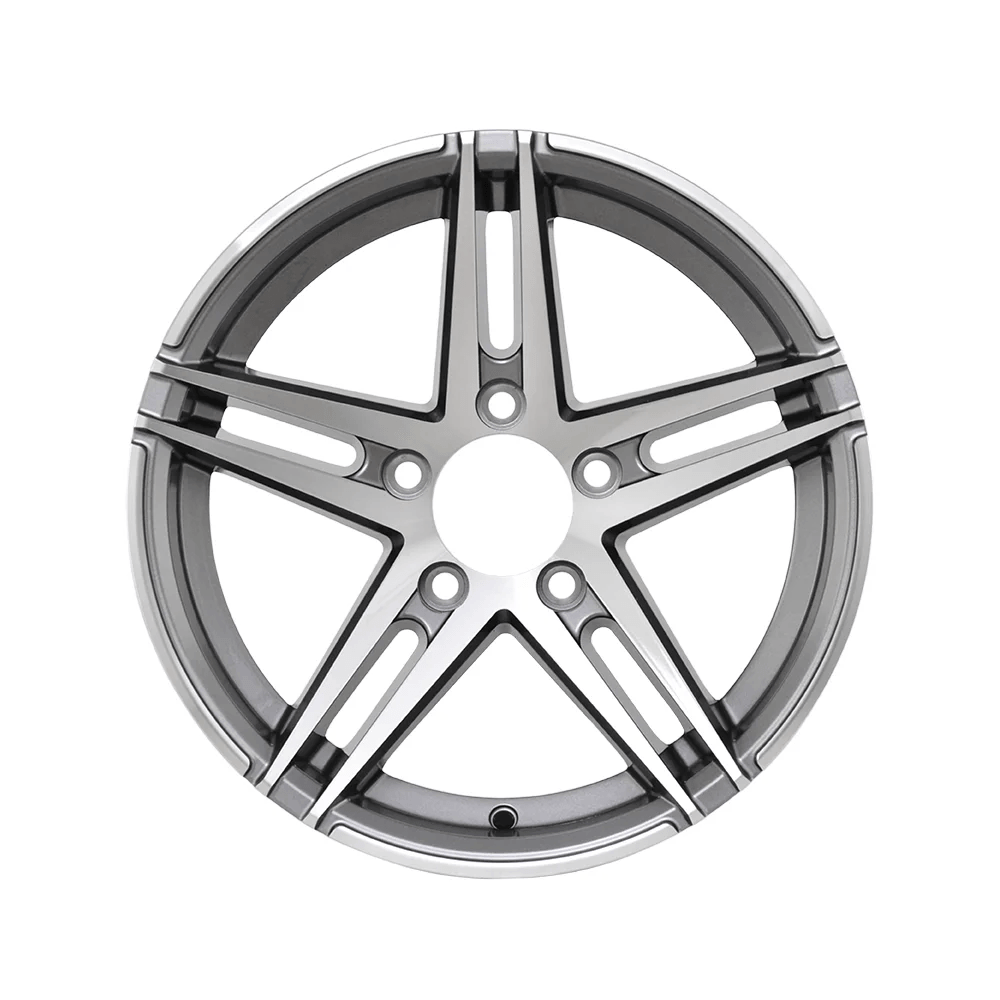
A hot dip galvanized trailer wheel rim presents a zinc-coated steel surface intended for trailer duty where moisture and outdoor storage are routine. The galvanizing step is the primary surface protection method described for the product, distinct from paint-only finishes.
Wheel Rim Structure and Manufacturing Quality
Rim profile, weld quality and dimensional consistency support mounting on compatible hubs and correct tyre fitment. Process control in forming, welding and finishing underpins that consistency before the rim enters the galvanizing line.
Product Specifications for Different Trailer Requirements
Buyers select diameter, width, bolt pattern, centre bore and load capacity to match trailer design and tyre choice. Options and any customisation follow what the factory can actually produce and inspect, not an open-ended list of theoretical sizes.
Why Source These Galvanized Wheel Rims
Hot dip galvanized surface treatment, defined manufacturing steps and inspection of dimensions, welds and coating give purchasers a clear basis for approval. Specification support and, where offered, OEM or custom arrangements allow trailer builders to align rim supply with their hub and tyre standards.
Where Can Hot Dip Galvanized Trailer Wheel Rims Be Used?
Boat Trailers
Frequent launching, salt or fresh water splash and open-air storage make corrosion protection especially relevant on boat trailer rims.
Utility Trailers
General cargo and equipment trailers operate in mixed weather and road conditions where a durable metallic coating reduces reliance on paint alone.
Agricultural Trailers
Soil, moisture and outdoor yards expose rims to mud and water; galvanizing is commonly considered for that duty within the rim's rated capacity.
Other Trailer Applications
Further uses depend on load rating, dimensions and hub compatibility. Each application still requires confirmation that the rim specification matches the trailer design. Galv Trailer Rims of this type are matched to the trailer category through those technical checks.
How to Choose the Right Galvanized Trailer Wheel Rim
Check Rim Diameter and Width
Diameter and width must suit the tyre size and the trailer's wheel envelope so that load and clearance remain correct.
Confirm Bolt Pattern and Center Bore
Stud pattern and centre bore must match the hub. Incorrect pattern or bore prevents safe mounting regardless of coating quality.
Verify Load Rating
The rim's rated capacity must meet or exceed the share of trailer load assigned to that wheel position under the trailer's design rules.
Review Galvanized Coating Requirements
Coating specification and inspection evidence are reviewed against the operating environment, especially for marine or continuously wet use.
Why Source Galvanized Trailer Rims from a Professional Manufacturer?
Manufacturing and Process Control
Controlled forming, welding and handling feed consistent rims into galvanizing. Dimensional and weld checks before coating reduce the chance of coating a part that cannot be used.
Product Quality Inspection
Inspection after galvanizing covers critical dimensions, weld zones and coating appearance or thickness as agreed. Clear criteria make batch acceptance straightforward for distributors and trailer plants.
Customization and Bulk Order Support
Available sizes, packing methods and order quantities are confirmed against production capability. Stable bulk supply depends on locked specifications and agreed inspection plans.
Selection and Inspection Points for Galvanized Trailer Rims
| Factor | Why It Matters | What to Confirm |
|---|---|---|
| Surface preparation | Determines coating adhesion and coverage | Clean, scale-free steel before the zinc bath |
| Coating continuity | Protects steel from moisture | No bare spots on critical surfaces |
| Rim dimensions | Ensures hub and tyre fit | Diameter, width, bore, bolt pattern |
| Welds and structure | Carries load in service | Integrity before and after galvanizing |
| Load rating | Matches trailer design | Rating suitable for wheel position |
| Inspection records | Supports acceptance and traceability | Agreed checks documented per batch |
Frequently Asked Questions
How long does hot dip galvanizing last on trailer wheel rims?
Service life varies with coating quality, climate, road chemicals, mechanical wear and storage conditions. No single duration applies to every trailer or region; inspection in service remains necessary.
Does hot dip galvanizing prevent trailer wheel rims from rusting completely?
Galvanizing greatly slows atmospheric corrosion of steel but does not make the rim immune forever. Damage, extreme environments and wear can still allow rust if bare steel is exposed and left unaddressed.
What is the difference between hot dip galvanized and painted trailer rims?
Hot dip galvanizing forms a bonded zinc metallic coating through immersion in molten zinc. Paint is an organic film applied to the surface. The two systems differ in how they protect steel, how they wear and how they are repaired.
Can galvanized trailer wheel rims be used for boat trailers?
They are commonly considered for boat trailers because of moisture exposure, provided dimensions, load rating and hub fit are correct. Marine environments are severe; periodic inspection is still required.
How can buyers check the quality of galvanized wheel rims?
Buyers review dimensional reports, weld quality, coating appearance or thickness data, load rating documentation and sample fitment to the hub and tyre. Agreed inspection at source or on receipt supports bulk acceptance.
Galvanizing as Surface Protection for Trailer Wheel Rims
Hot dip galvanizing cleans steel, treats it for wetting and immerses it in molten zinc so that a protective coating forms on the rim. Process control and inspection determine whether that coating is continuous and whether the rim still meets dimensional and structural needs for trailer service. YONGQIANG supplies trailer wheel rims including hot dip galvanized options for outdoor and moisture-exposed use. Review of rim size, bolt pattern, load rating and coating inspection against the trailer design supports selection of galvanized rims suited to boat, utility, agricultural and related trailer applications.
- Trailer
- Utility Trailer
- Dump Trailer
- Boat/Watercraft Trailer
- Aluminum Trailer
- Equipment Trailer
- Box Trailer
- Hydraulic Tipper Trailer
- Boat Trailer
- Specialist Trailer
- Caravan
- Off Road Caravan - Crest 16
- On Road Caravan - Trekker 19
- On Road Caravan - Trekker 22F
- Pop-top Caravan - Pod 15C
- Trailer Parts
- All Parts
- Contact Us
-
- No.888 South Longqian Ave, Bailongqiao Town Jinhua Zhejiang, China
-
+86-579-82217008
+86-579-82221688 -
sales@yqtrailer.com
 High-Quality Trailers & Caravans Manufacturer